Blog · 17 September Pioneering in a Haarlemmermeer meadow
Hip hip hooray, it's our birthday! Exactly 110 years ago, on 19 September 1916, an aircraft landed at Schiphol for the first time. Let’s take a look back at how it all began.
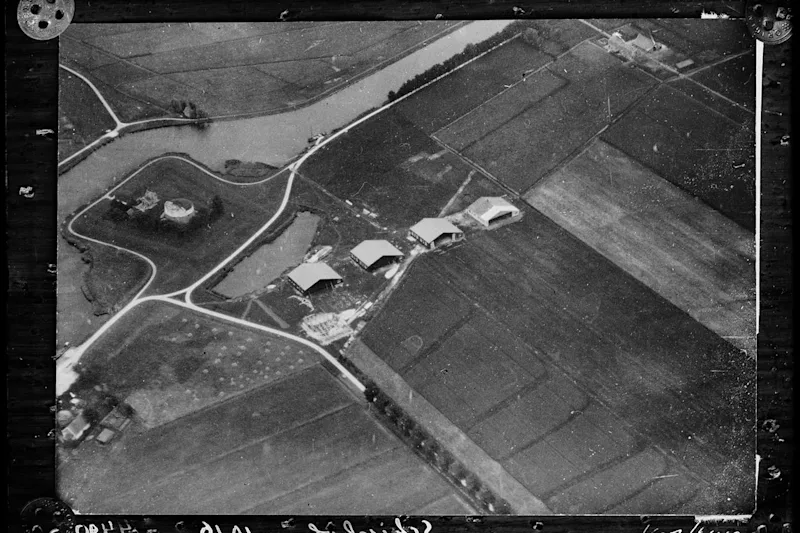
It’s early 1916, and farmer Knibbe sees an unusual visitor walking onto his land. Knibbe lives and works right next to Fort Schiphol, on the edge of the Ringvaart canal surrounding the Haarlemmermeer polder. The visitor, a military officer with a distinctive moustache, is Colonel Henk Walaardt Sacré, commander of the recently established Aviation Department (Luchtvaart Afdeeling, LVA).
A worthwhile idea
He has a mission: to find a piece of land for a new military airfield. With the world suffering from the horrors of the First World War, it is a worthwhile idea, even in the neutral Netherlands.
The two men reach an agreement. For just over 55,000 guilders, equivalent to more than €450,000 today, Walaardt Sacré purchases the 12-hectare site, roughly the size of eighteen football pitches. He wastes no time putting it to use. On 19 September 1916, the very first military aircraft touches down on the site. Schiphol, still little more than a field with four wooden hangars, becomes a reality.
Cargo, mail and passengers
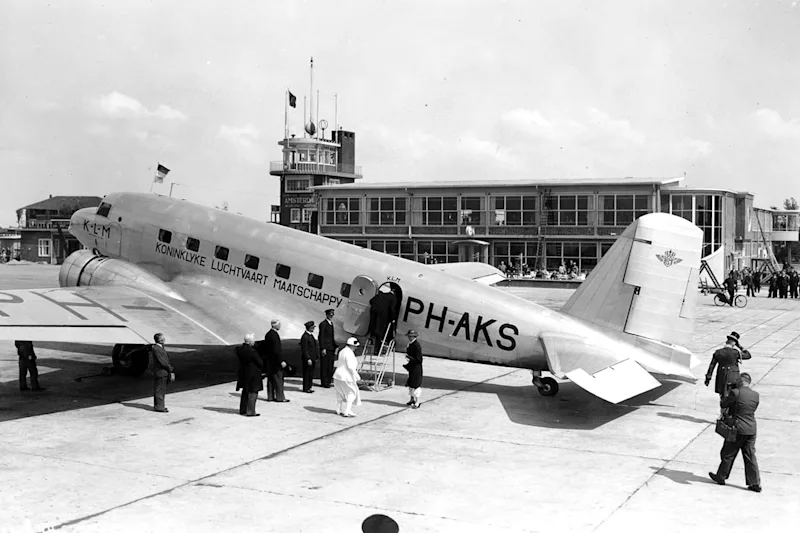
Because the new airbase did not become fully operational until just ten days before the end of the war, Schiphol was never used as a wartime airfield. It soon became clear, however, that the brand-new airfield could also serve a very different purpose: handling cargo, mail and even passengers. On 17 May 1920, the first passenger aircraft lands at Schiphol.
When the last military personnel leave in 1923, Schiphol begins its new life as a civilian airport. That does not immediately lead to large numbers of travellers, however. In the early years, Schiphol does not always enjoy the best reputation. Located on the bed of the former Haarlemmermeer lake, several metres below sea level, the site is often extremely muddy and waterlogged.
Swamp Schiphol
Aircraft often have to be pulled out of the mud, and boarding a flight across the soggy field can be quite an ordeal. As a result, the airport becomes known by nicknames such as ‘Swamp Schiphol’ and ‘Schiphol Mudport’. Reaching the airport is no easy task for travellers either. They have to travel via narrow country roads, toll bridges or, in some cases, even on foot.
This is a constant source of frustration for airport manager Jan Dellaert. He firmly believes that aviation has a bright future and sets out to modernise Schiphol. His first priority is installing drainage systems to keep the site dry. In 1926, the Municipality of Amsterdam becomes the airport's new owner and, with the 1928 Olympic Games on the horizon, a series of major improvements follow. This includes a terminal building, an air traffic control tower, a concrete apron and a proper access road.
More space
In the years that follow, Dellaert propels Schiphol onto the international stage, but sees much of his work undone by the outbreak of the Second World War. After the war, air travel grows increasingly popular, and the arrival of the jet aircraft makes it clear that more space is needed.
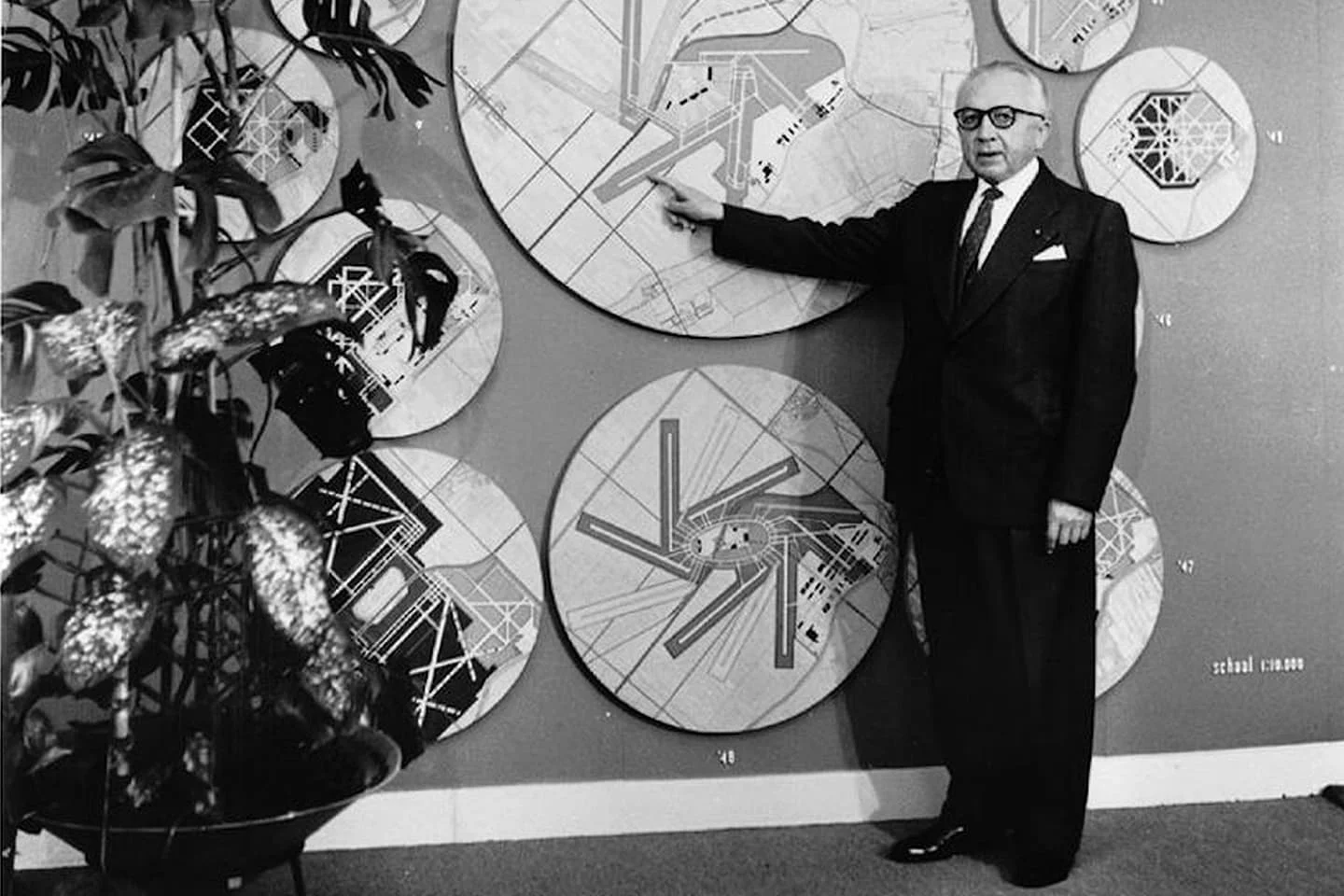
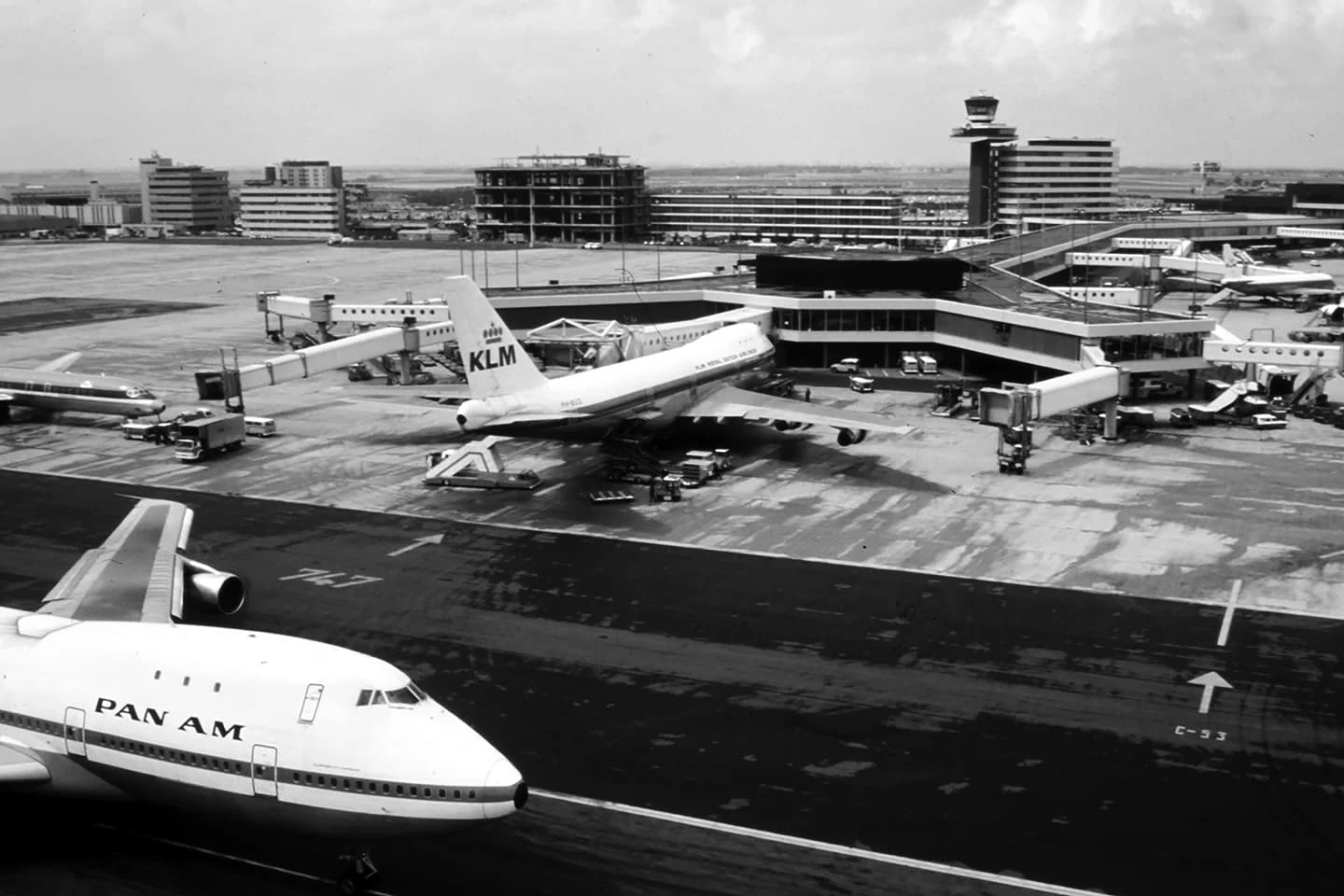
Dellaert, a true aviation pioneer, comes up with a masterstroke. An entirely new airport located 2.5 kilometres further west is built. In 1967, Queen Juliana officially opens the terminal building designed by architect Marius Duintjer and engineer Frans de Weger. The new Schiphol Centre is groundbreaking, featuring a centrally located terminal and runways extending in all directions. Interior designer Kho Liang Ie and graphic designer Benno Wissing are responsible for an equally iconic interior design.
Period of growth
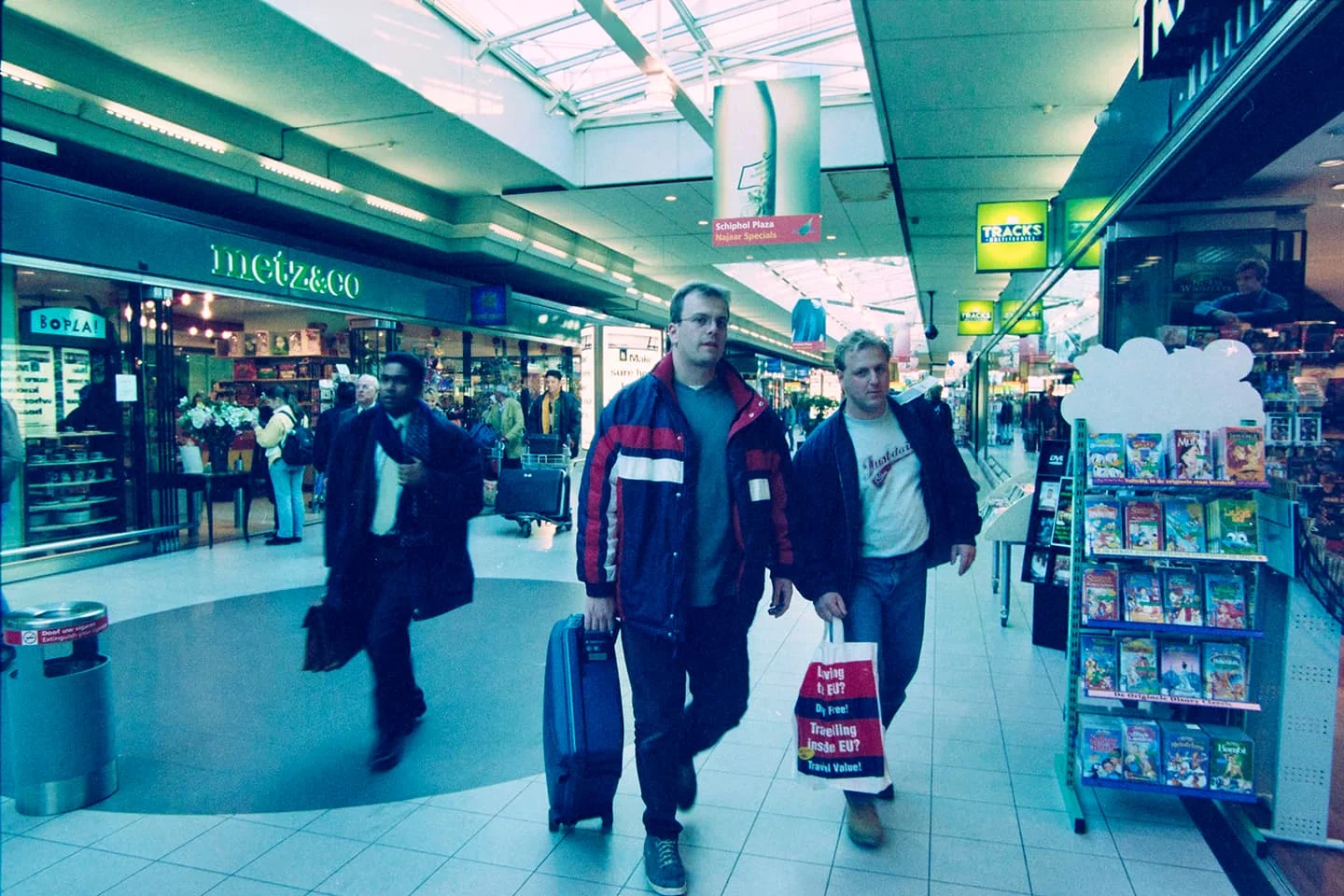
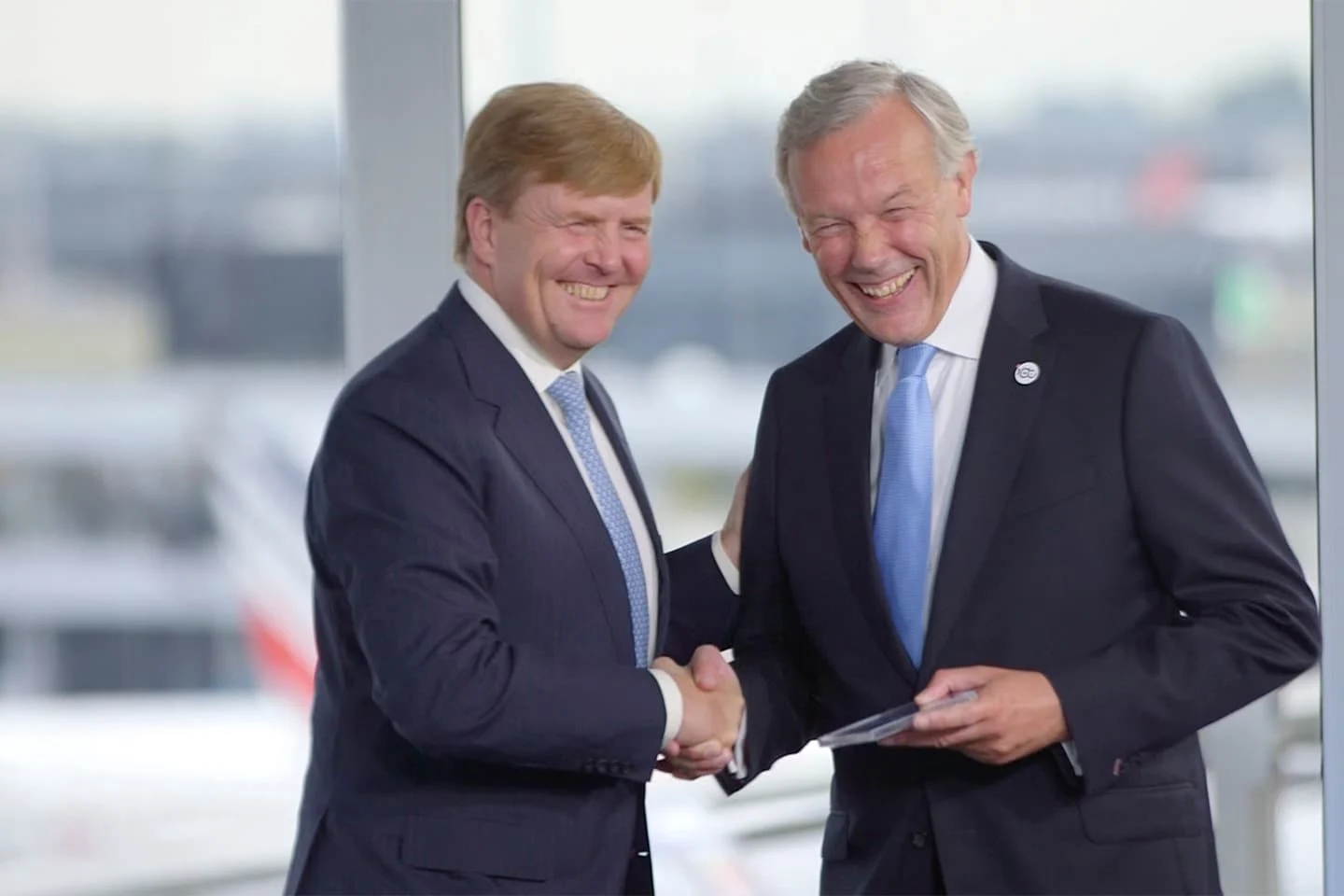
This marks the start of a long period of growth. Increasing numbers of travellers choose Schiphol, a new air traffic control tower is built (1991), the original terminal building makes way for Schiphol Plaza (1997), and a fifth runway is added (2003). In 2016, as part of Schiphol's centenary celebrations, King Willem-Alexander grants the airport the right to bear the Royal designation.
And Schiphol continues to evolve today. In 2025, a new Strategic Plan is unveiled and investments of around €10 billion are announced. In the same year, a new brand identity and logo are introduced. All this ensures we can keep products, people and ideas moving, connect the Netherlands with the world, and help a small country make a big impact.
Pride
Over the past 110 years, we have built a distinctly Dutch success story, one that we can all be proud of. And if one thing has stood the test of time, it is Dellaert’s conviction that aviation would shape the future. More than a century later, that vision continues to connect people, places and possibilities around the world.
More than 100 years of Schiphol
Want to know more about the history of our airport?