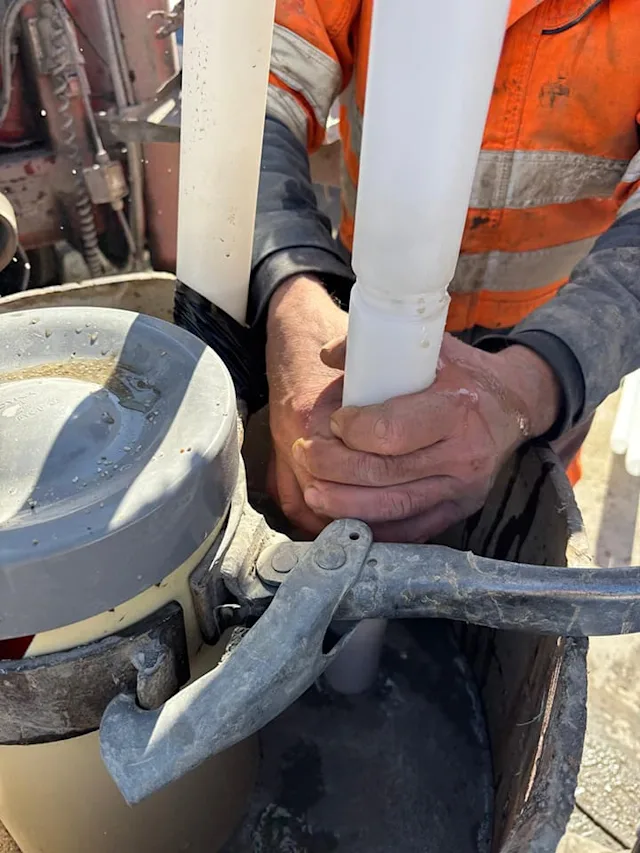
Drainage test
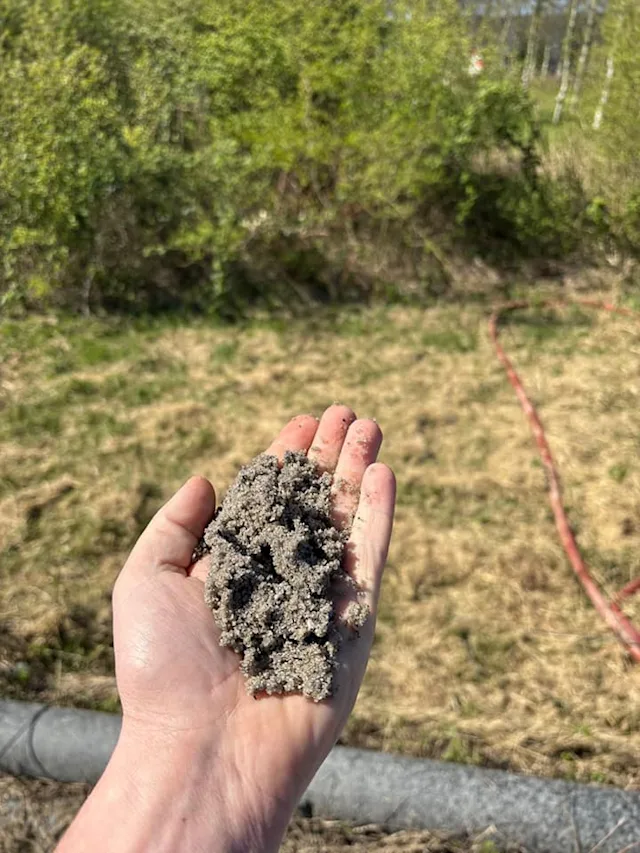
Drainage test
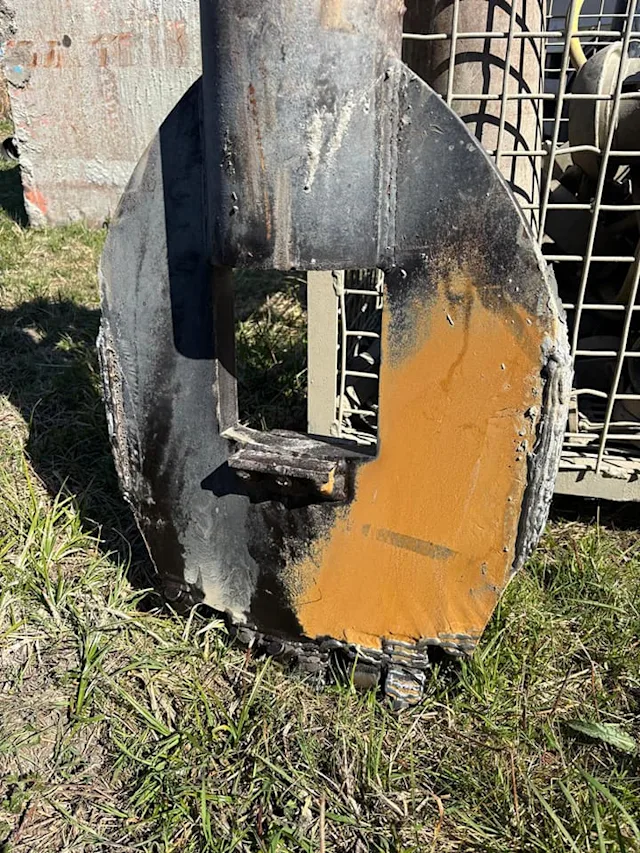
Drainage test
On the greenfield, the grassy area under the control tower, FUNdament (a DuraVermeer and Mobilis TBI construction consortium) is currently carrying out preparatory work for the construction of the new baggage basement. An important part of these preparations is the drainage test. Such tests cost a lot of money, but they can have a big impact on the design, the speed of construction and the final cost of the whole project.
Drainage test
Drainage test
Drainage test
During a drainage test, we measure and check the groundwater levels in a specific area. In order to be able to construct the new baggage basement, we have to carry out various activities below the current groundwater level. We of course prefer to do this in a dry environment, which is why we temporarily lower the groundwater level. We also check whether we can return the pumped water to the ground in a sustainable way. This technique is known as return drainage.
With the drainage test, we mainly test whether returning water to the ground at this location is technically feasible and effective. If it is successful, we can build more sustainably. We do not have to use underwater concrete, we use less energy, and we're finished sooner. Also not unimportant: we collect essential geohydrological data, such as the permeability of the soil layers and the capacity of the return field.
The drainage test is being carried out by MOS Grondwatertechniek, one of the best companies in the Netherlands in the field of pump drainage. MOS only carries out one or two of these specialised tests each year, which indicates how complex and rare this type of work is. 'A first pump test was carried out at this location two years ago,' says Bram Bakker of MOS Grondwatertechniek, 'which mapped out the range of underground water permeability and the associated risks. In addition, a capacity test has now been carried out to determine how much water can be extracted from the construction pits per hour. These insights are of great importance for the later implementation, in which large quantities of groundwater must temporarily be pumped away on a continuous basis.'
During the work activities, it became clear that the subsoil was more complex than previously thought. The clay layer turned out to be deeper and more stubborn than we had expected. Deeper drilling has therefore now been carried out. This way, we want to obtain reliable data on the capacity of the soil of the return field, which is about 2 kilometres from the construction site. We use this return field, which is owned by Schiphol, for dewatering but now need to reassess its suitability for this extensive job.
Three return wells have now been drilled. Based on the intake capacity of one well, we can calculate whether the system as a whole is sufficient or whether additional wells are needed. By accurately mapping out how the subsoil behaves and how much water it can handle in advance, we limit the risks. We can also potentially use the return wells in future projects.
The return wells have been installed and with some final preparations being completed, the actual drainage test is about to begin. We will check how much water is extracted from the soil per hour and how much the soil can absorb per return well. We will also monitor how the groundwater behaves in the area. We expect the results after a few weeks, and they are of crucial importance for the further design of the basement.
'In both the preparation and the execution, such a test requires Olympic-level teamwork. Everything has to be just right,' says geohydrologist drs. Lars Lamers.