Weather conditions
Storms, lightning, wind, hail and snow: the weather has a big impact on aeroplanes.

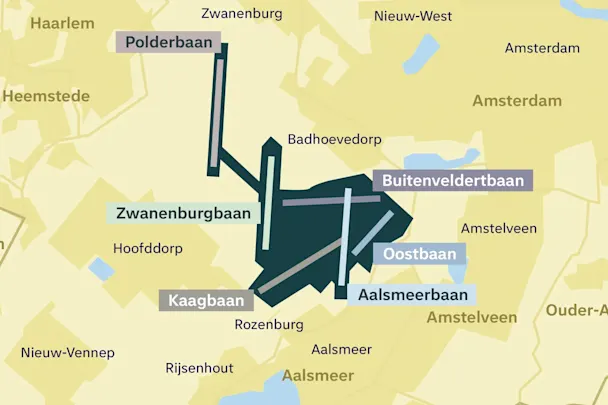
If you often hear and see aircraft from your house, there’s a good chance you live under a flight path to and from the runways at Schiphol. But do you know which route is associated with which runway(s)? Read on to find out everything you need to know about the runways and routes the aircraft use.
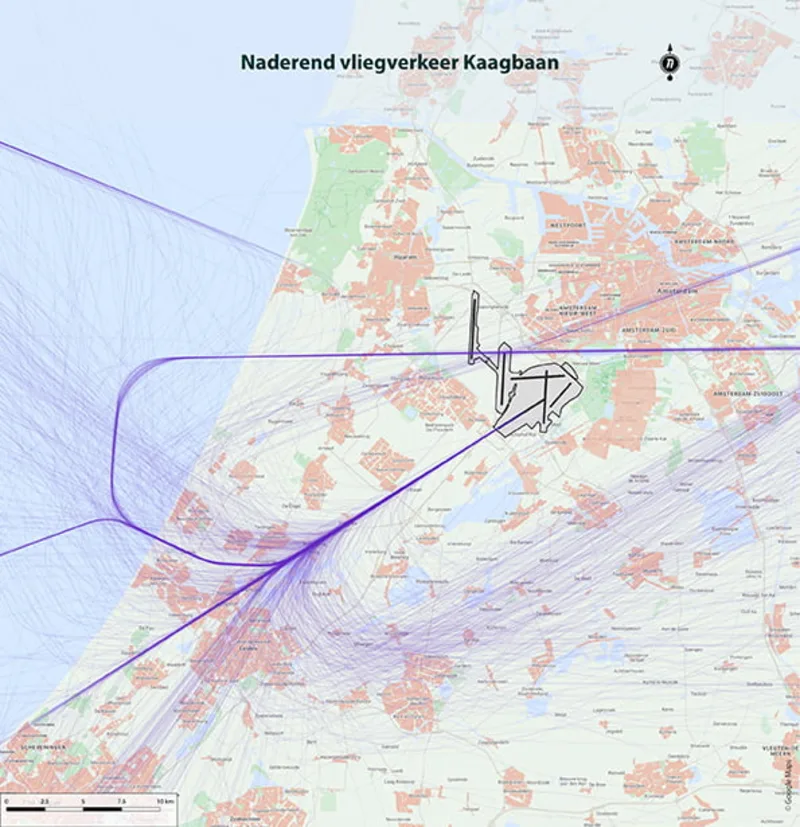
Aircraft approaching from the North Sea to land on the Kaagbaan Runway circle over Katwijk, Noordwijk and Oegstgeest and fly above the A4 motorway. They descend further at Abbenes and Nieuw-Vennep before landing at Schiphol. Planes flying in from an easterly direction make their approach above Amsterdam and Hoofddorp. Those coming in from a south-westerly direction fly over Leiden.
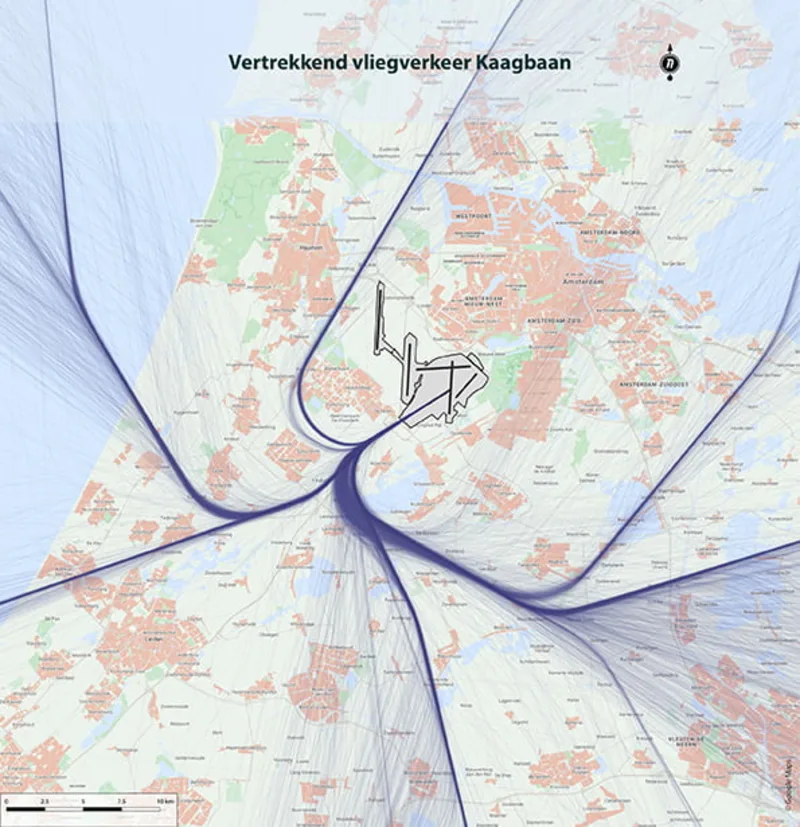
Departing aircraft take off in the direction of Nieuw-Vennep and then head west towards Kaag and Sassenheim before climbing further above Katwijk or Noordwijkerhout and then:
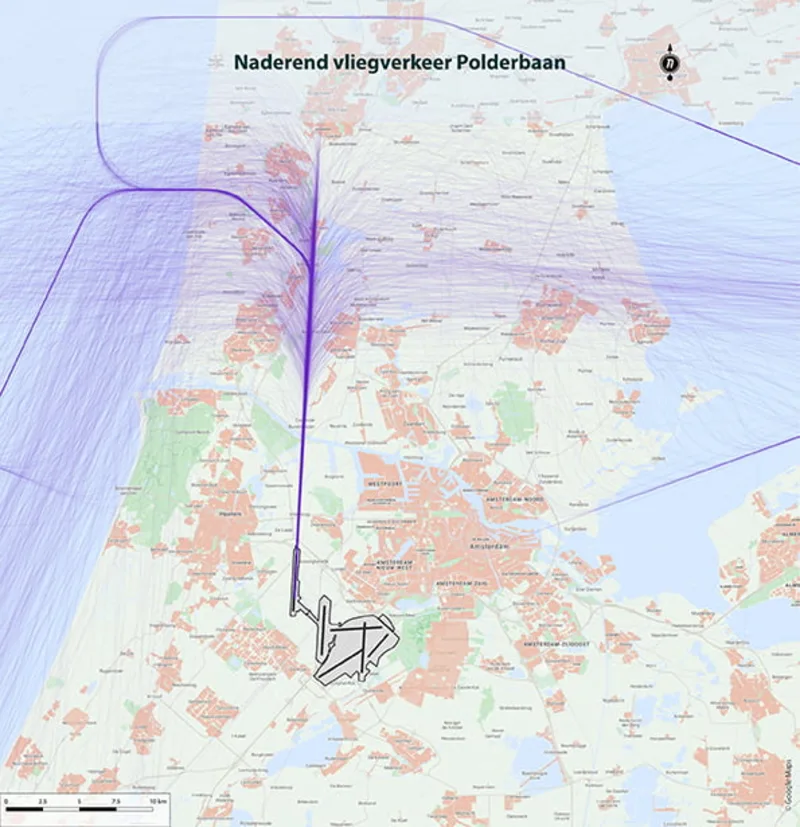
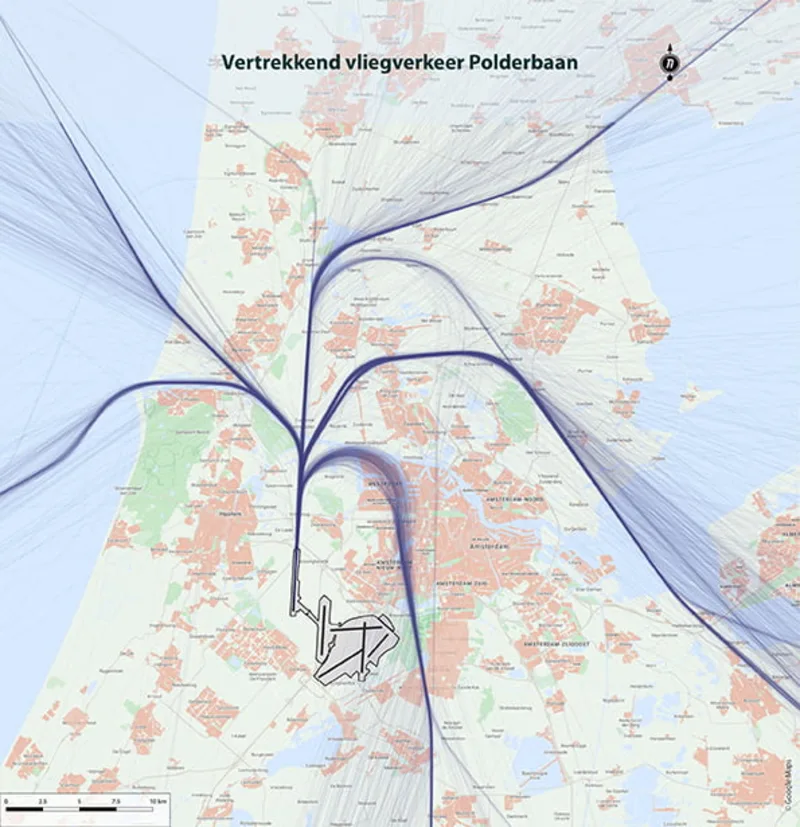
Aircraft that land on the Polderbaan Runway during the day either approach from the east or the North Sea. Flights from the east pass over the Markermeer lake above Volendam before making a turn above Krommenie and flying straight towards the Polderbaan Runway. From the North Sea, aircraft fly in over the dunes between Wijk aan Zee and Egmond, turn over Uitgeest and descend above the A9 motorway, Spaarndam and Haarlemmerliede before landing on the runway next to Vijfhuizen.
At night, landing aircraft approach from the east over the Markermeer lake and go via Hoorn and Heerhugowaard to the North Sea. Just like the flights that approach from a south(westerly) direction, they then follow a fixed flight path between Limmen and Castricum before flying to the north of Uitgeest towards the Polderbaan Runway.
Departing aircraft ascend over Haarlemmerliede and Spaarndam, then:
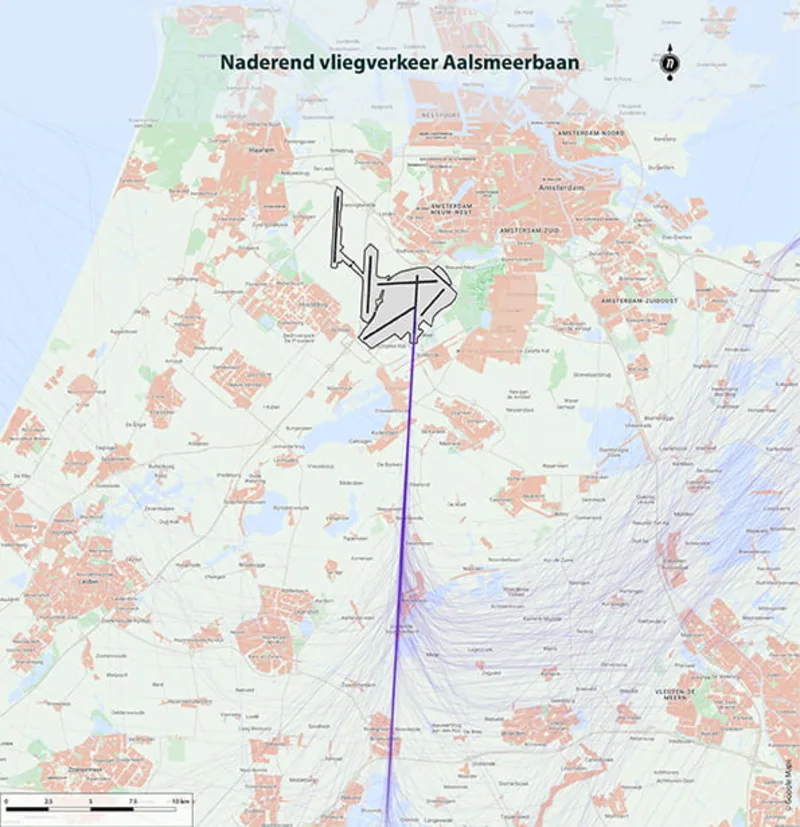
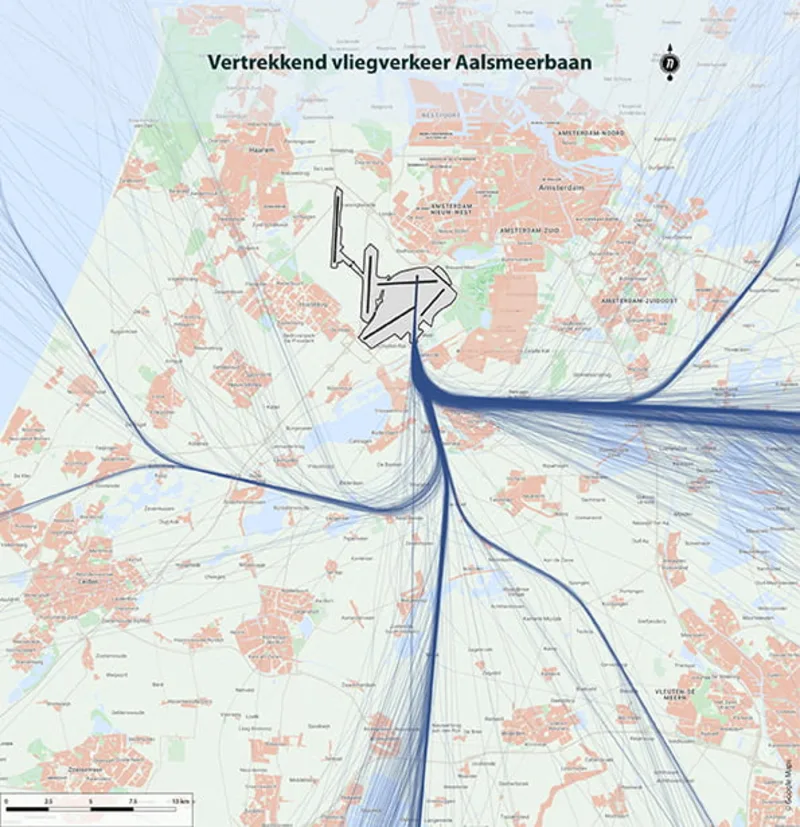
Aircraft coming in to land on the Aalsmeerbaan Runway from the south make their approach from an easterly or south-westerly direction. Planes coming from an easterly direction fly over Weesp, the municipality of De Ronde Venen and Woerden, while those coming from a south-westerly direction fly over Katwijk, Leiden and Alpen aan den Rijn. These aircraft then turn above Bodegraven-Reeuwijk and Nieuwkoop before descending over Uithoorn and Aalsmeer and flying straight towards the Aalsmeerbaan Runway.
Aircraft that take off from the Aalsmeerbaan Runway climb over Aalsmeer and Uithoorn, then:
- eastbound flights turn towards De Ronde Venen and then fly above Wijdemeren or Weesp;
- southbound flights fly above Nieuwkoop, Bodegraven-Reeuwijk and Woerden.
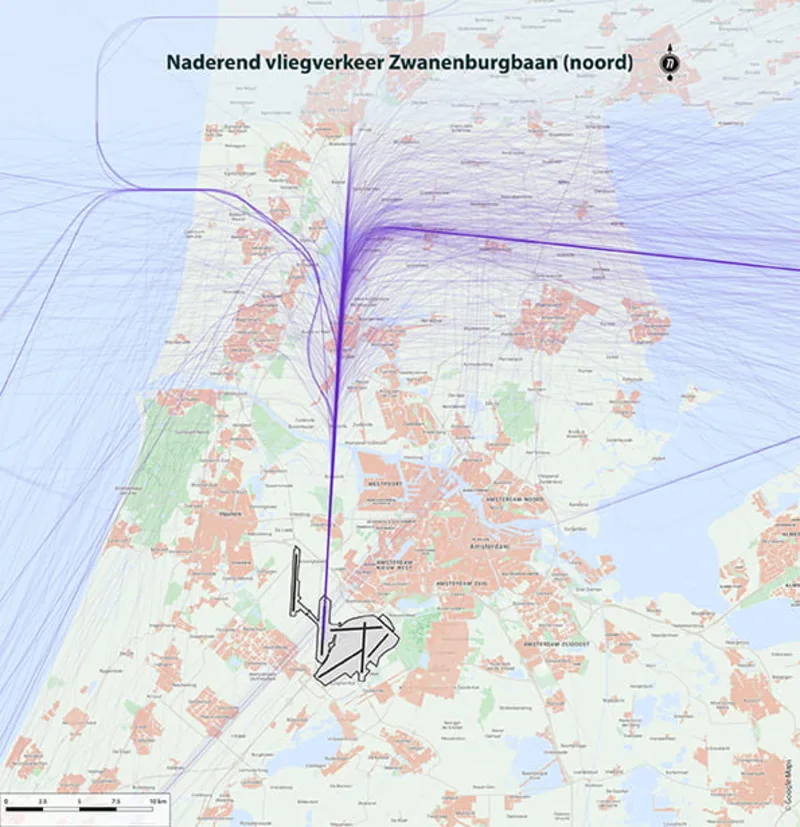
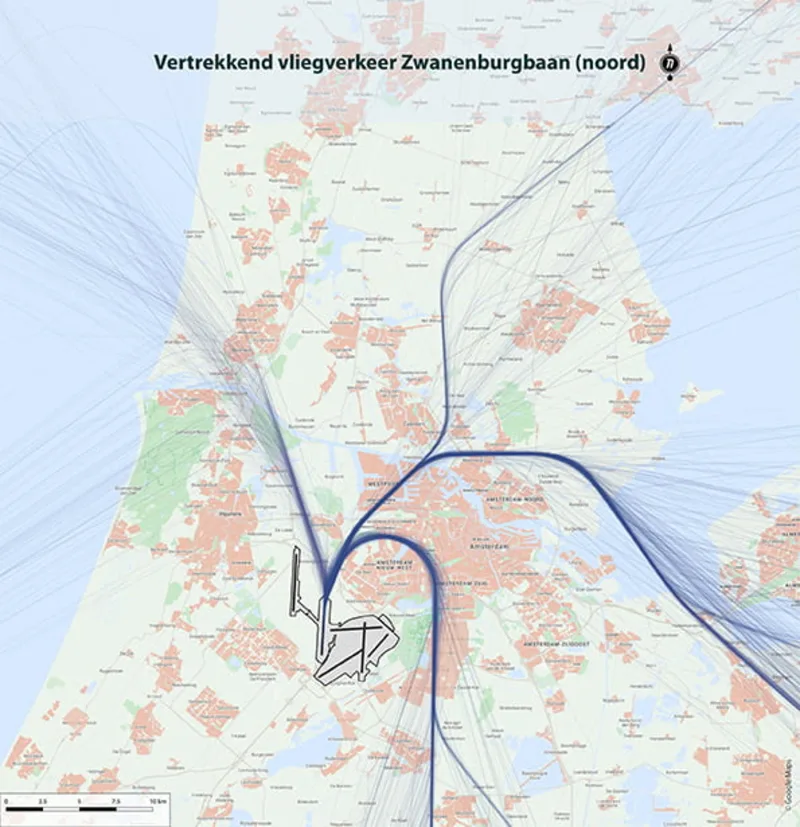
Aircraft coming in to land on the Zwanenburgbaan Runway from a northerly direction approach from the east above the Beemster and Graftdijk and then turn south over the area between Alkmaardermeer and Wormerveer. They then descend towards Schiphol over Krommenie, Assendelft, Halfweg and Zwanenburg.
Departing aircraft ascend in a northerly direction over Zwanenburg and Halfweg, then:
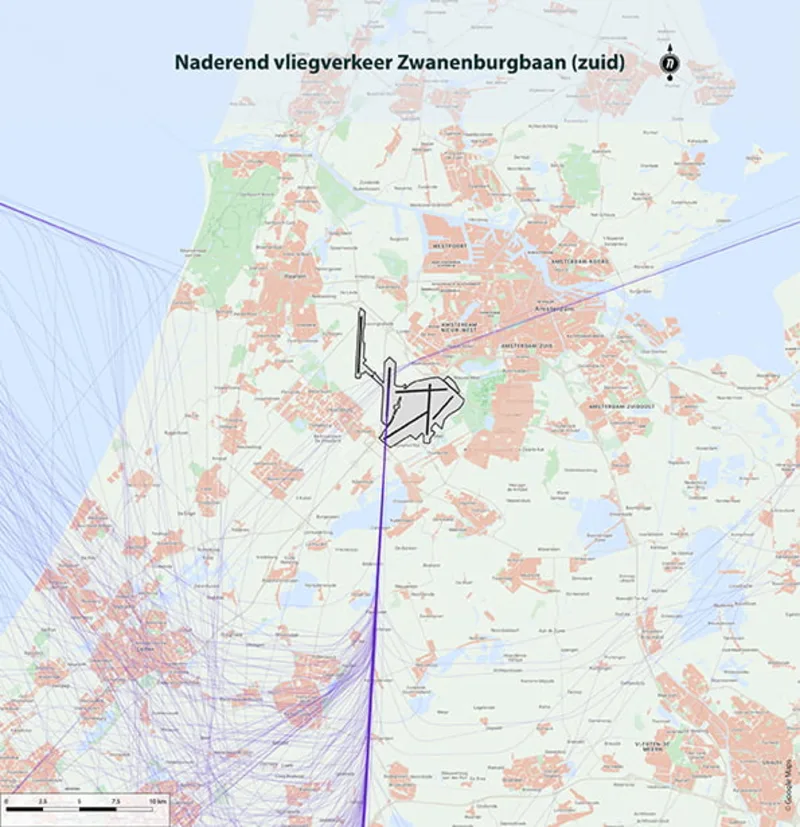
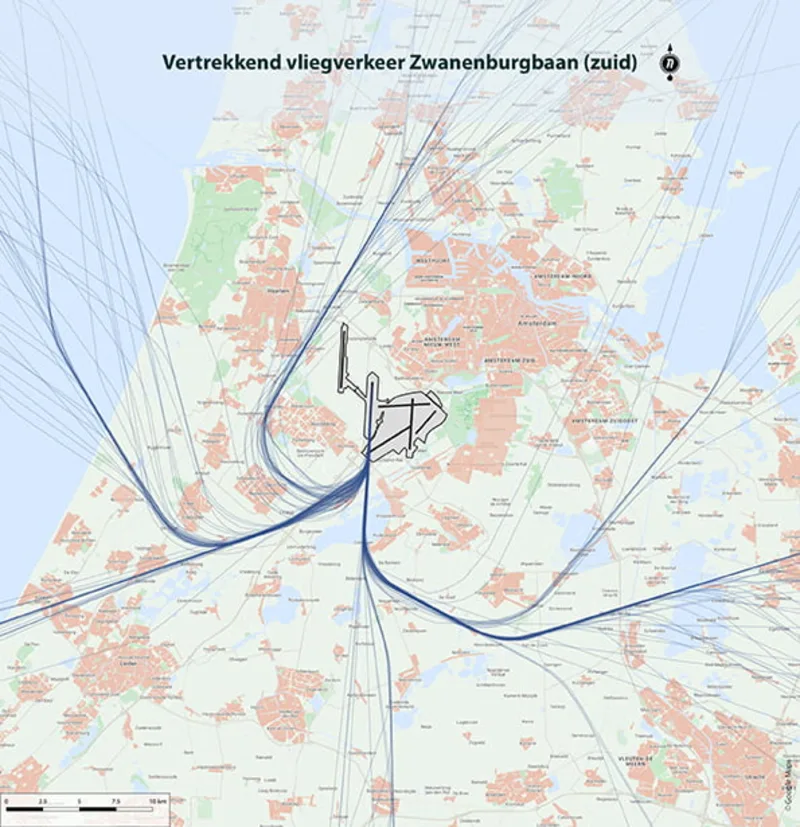
The air traffic coming from the south to land on the Zwanenburgbaan Runway almost always comes from the direction of the North Sea and flies over the area between The Hague and the Maasvlakte. After flying south of Zoetermeer, they head north and make their descent above Zwammerdam and Aarlanderveen before reaching the Zwanenburgbaan Runway via the Westeinder Plassen lake and Aalsmeer.
Departing aircraft take off towards the south and then:
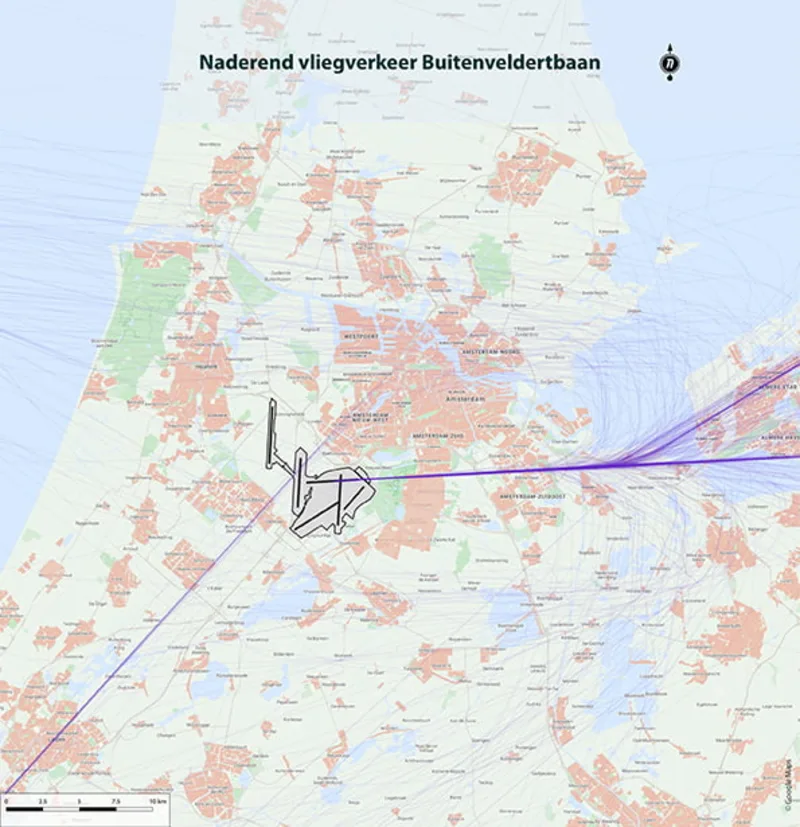
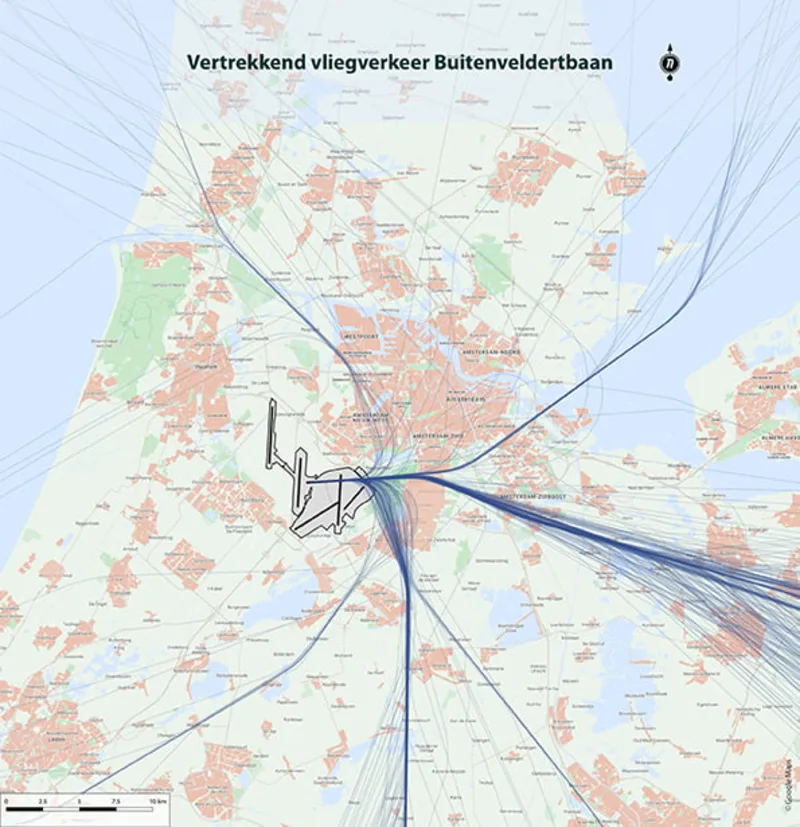
Aircraft coming in to land on the Buitenveldertbaan Runway approach above Almere and Muiden and descend over Bijlermeer, Amstelveen North and the Amsterdamse Bos recreational area, before landing at Schiphol.
Departing flights climb over Buitenveldert before:
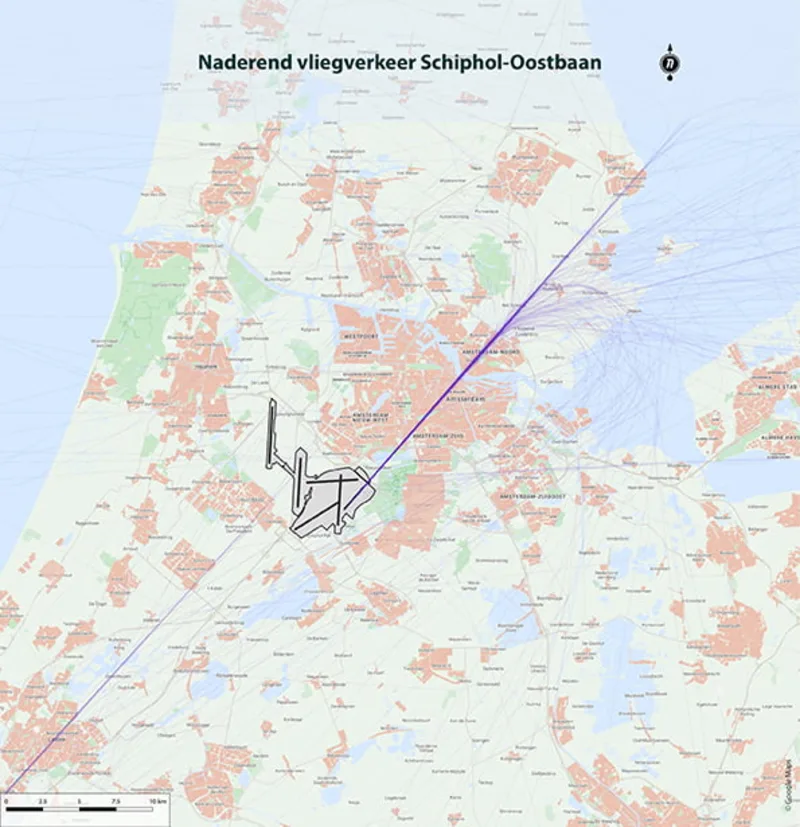
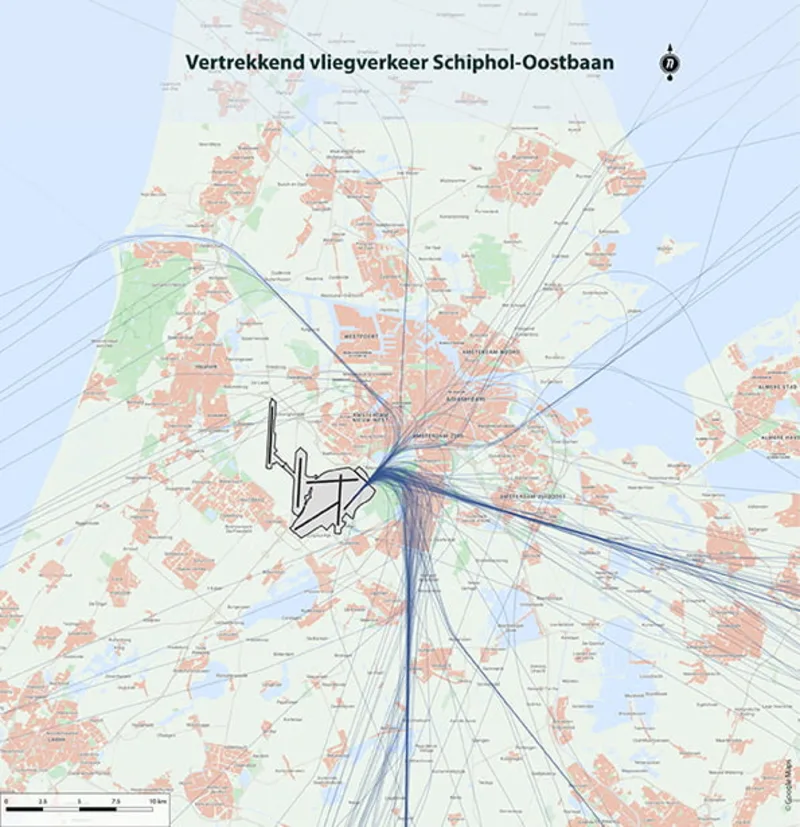
The Schiphol-Oostbaan Runway is mainly deployed for general aviation, private jets and helicopters. In the event of a south-westerly storm, commercial aircraft may land on the Schiphol-Oostbaan Runway. In that case, air traffic approaching from the direction of Volendam and Monnickendam fly fairly low over Amsterdam North and Amsterdam city centre, descend further over Oud-Zuid and De Nieuwe Meer and then land at Schiphol.
Departing aircraft take off in a north-easterly direction and then:
Want to follow live air traffic? Check the Local Community Contact Centre's Flight Tracker or their app.
On this page you can see what works are being done and which runways have limited or no availability.
As soon as an aircraft's engines are running, they produce noise. The closer you are to this noise source, the louder it is. This is often not a problem if you are flying yourself. But if you are involuntarily confronted with it, you may experience it as a nuisance. Whether you experience nuisance depends on which runways we use at what time of day, the weather conditions and what type of aircraft fly over. See which runways are currently in use at Schiphol.
Storms, lightning, wind, hail and snow: the weather has a big impact on aeroplanes.
Which flight paths do aircraft follow to and from our runways?