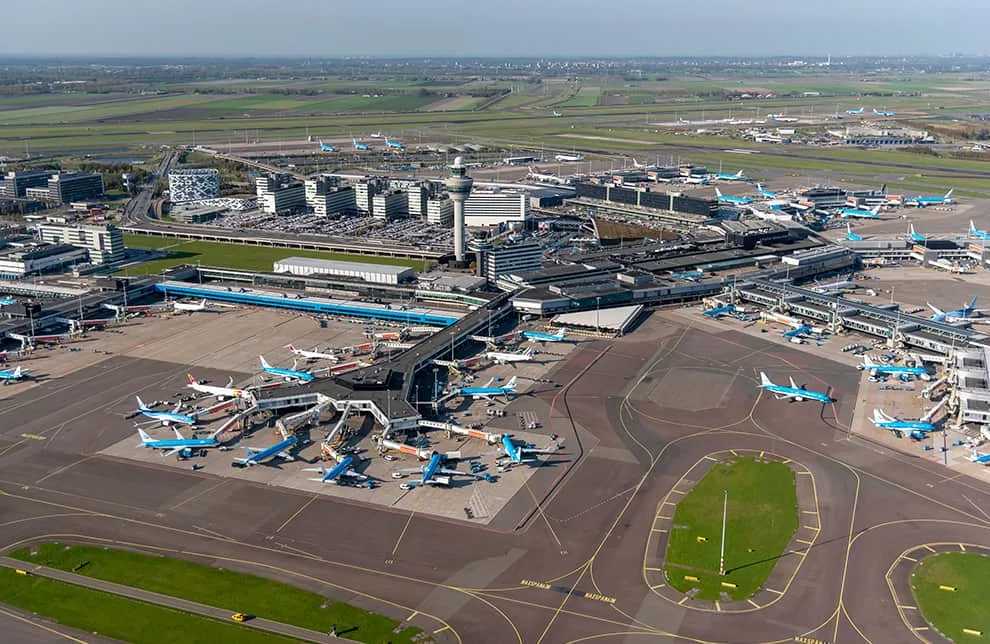
Assets that are in good condition and that deliver good results are key to the quality Schiphol wants to offer travellers and airlines. That's why, day and night, a lot of maintenance is carried out to ensure that the airport facilities continue to deliver high operational performance. Despite all these efforts, we are behind on the replacement and renewal of some of our assets. That’s why investments need to be made now. You can read more about this here.
Investigation into backlogs
Maintenance backlogs are a major area for improvement at the airport. To gain insight into the origins of these backlogs, Schiphol asked the Crisislab research institute to conduct a thorough investigation. The objective was to find out how it could have come to this, what we can learn from the situation and what (else) we need to do in order to prevent this from happening in the future. The research looked at projects affected by maintenance backlogs, including Pier C and the baggage system.
The causes
The investigation (in Dutch only) confirmed that a focus on growth and costs was the main cause of the maintenance backlogs, along with too little focus on Schiphol as an infrastructure company. Not enough attention was paid to the management and maintenance of existing assets at the airport. Furthermore, six other causes were identified in the report:
- There was no set long-term replacement maintenance schedule
- Maintenance was secondary to other objectives
- Projects became larger in scope, resulting in delays
- Projects had to adhere to rules and regulations
- The cooperation agreement with maintenance partners was unsuitable
- The allocation system of investments and maintenance costs did not include maintenance replacement in the settlement.
Getting to work on the solutions
Schiphol endorses these conclusions. Schiphol is primarily an infrastructure company and should organise itself as such. A fundamentally different approach is needed to catch up on the necessary maintenance. This is in line with the direction Schiphol is already taking and the investigation confirms the urgency of this issue. Schiphol takes the study’s recommendations seriously and has determined an approach for the short, medium and longer terms:
- Short term. For the first few years, we will be using every means possible to maintain/replace airport facilities so that they continue to deliver high operational performance. Over the next three years, Schiphol is investing 3 billion euros to catch up on the maintenance backlogs. Following the investigation, Schiphol launched a large-scale change programme called ‘Building Schiphol Infrastructure’. The infrastructure at Schiphol is one of nine priorities at Schiphol and there is continual concern for it within the Executive Team.
- Medium term. In the period after that, we need to ensure that there are clear priorities and plans, budgets and contracts. Schiphol and the maintenance partners then need to keep to the schedule and the agreements made to prevent further backlogs.
- Longer term. Flexible space is needed for the longer term and larger replacement maintenance. An example is the new baggage basement, which will allow for the replacement and renewal of the current baggage system when commissioned.