Blog · 28 November 2025 How SunExpress Uses Deep Turnaround to keep flights moving
When every minute counts, real-time data can make or break an airline’s schedule. For SunExpress, a joint venture between Lufthansa and Turkish Airlines, ensuring smooth turnarounds is the ultimate goal. That’s where Deep Turnaround comes in.
We spoke with Yasin Saglam, Manager of Digital Operational Products at SunExpress and Oğuzhan Doğan Albayrak, Team Lead IOCC Operational Excellence at SunExpress about how Deep Turnaround can transform the way they manage ground operations and why understanding the business is just as important as building the tech.
“If you don’t know the business, you cannot create the solution,” Yasin says. “That’s why we invest time to understand what our teams are really dealing with.”

Yasin Saglam, Manager of Digital Operational Products at SunExpress
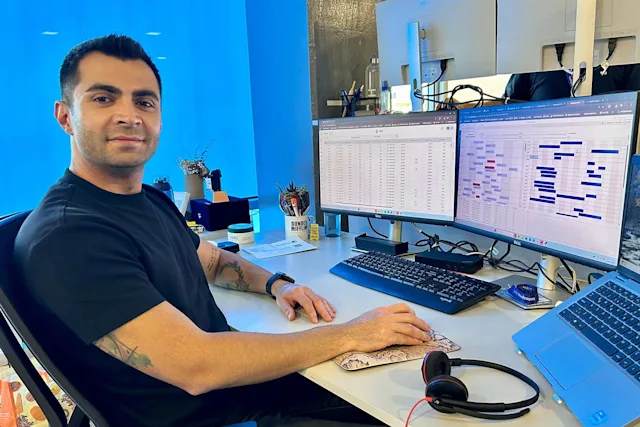
Oğuzhan Doğan Albayrak, Team Lead IOCC Operational Excellence at SunExpress
A growing network, a growing challenge
SunExpress operates over 200 routes across 35 countries. That includes flights from Antalya and Izmir to Schiphol, with plans to expand its fleet from 85 to 166 aircraft over the next decade. As the airline grows, so does the complexity of its operations.
Yasin’s team manages over 40 digital products, one of them is in-house built system, which acts as the airline’s operational data store. Their goal? To create a single source of truth for all turnaround events, no matter the airport, handler, or data format.
“As an airline we already have all the movements of our aircraft while they’re in the air,” Yasin explains. “But we were missing a lot of data while they’re on the ground. That’s why this systems is created to have all turnaround data from all partiers. And Deep Turnaround helps us with filling this gap tremendously.”
Turning data into action
By integrating Deep Turnaround into AviroConnect, their data store, SunExpress can track many turnaround events, from fueling to water disposal to unloading. These events are visualized on a Turnaround Management Screen, giving both headquarters and on-the-ground teams a clear view of what’s happening in real time.

“Before, if there was a delay in fueling, the only way for us to know about it is if the captain called the Integrated Operations Control Center in Antalya. He would have to make a call and report the delay. But he first needs to be aware of the fact that there actually is a delay with fuelling. We could easily lose 10-15 minutes because of this, which impacts our take-off slot, which means we could lose over an hour. But with the Deep Turnaround data, we can show if we are on time, near on time, or not. And, if there is an issue, act upon it immediately.
This kind of insight is especially critical at busy airports like Schiphol, where missing a slot can mean rescheduling multiple flights because of the reactionary delays, it can mean reassigning crew, or even triggering EU261 compensation claims.
“We are operating 24/7, so each and every delay at a station means that there will be a reactionary delay for the next one. So, this is basically the reason why we are eager to grasp what's going on, early. To get ahead of problems, not just responding to them.”
One platform, many sources
But building a unified view of operations isn’t easy. SunExpress works with different ground handlers and airports across Europe and Turkey, each with their own systems and data-sharing policies.
“Let’s say there are 30 events we track, some providers give us 15 events, some give 17” Yasin says. “We need all of them to get the full picture.”
In some locations, ramp agents still enter data manually after the turnaround is complete, which is also a big challenge. It can take 10-15 minutes before they enter the data in the system, but then it’s too late to act upon it. That’s why Yasin’s team is actively working on agreements to encourage real-time data entry .
“It’s a challenge to work with all parties, airports, handlers, regulators, but we’re making progress. The goal is to have live, accurate insights we can act on. It would be a lot easier if all airports we fly at have Deep Turnaround!”
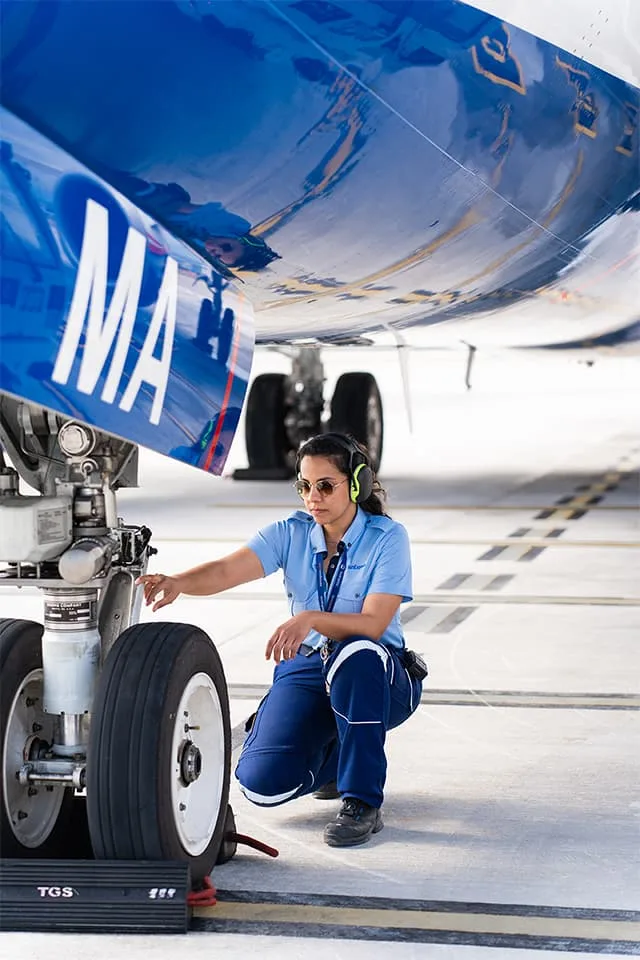

Pieces of the puzzle
“Once we have all pieces of the puzzle we can cover a lot of ground. Headquarters is then able to see the bigger picture regarding all of our operations, and the people on the ground have the right accurate information to know exactly what needs to be done. And, we’re also working on providing them with notifications and specific messages. But that’s still in development.
Beyond the now
While Yasin is focused on the present moment, Oğuzhan Doğan Albayrak and his team work across three dimensions: post-flight analysis, real-time operational challenges, and future trends & digital innovation. The value of turnaround data lies in its ability to enable the first two. Like Yasin, he works on integrating data from multiple sources; AI-powered systems like Deep Turnaround, mobile inputs from ground handlers, and airport APIs. Once complete, this will feed dashboards, for example in Qlik-sense and PowerBI), and machine learning models that help identify bottlenecks, benchmark airport performance, and even renegotiate SLAs with third parties.
“Turnaround time is no longer a black box,” he says. “We’re starting to see where delays come from, like fueling issues, and use that data to improve accuracy and accountability.”
Doğan’s explains that the crucial data Deep Turnaround provides is a game-changer:
“I’m especially exited about the analysis we can do. Like identifying the bottlenecks in a turnaround, feeding the data int our own machine learning models for predictive insights, refine turnaround cards with designated event times, optimising block times using Monte Carlo simulation, and the list goes on. Exciting times ahead.”
From insights to empowerment
From speaking to Doğan and Yasin, it’s clear they bring more than technical expertise to the table, they bring a deep understanding of the day-to-day realities their teams face, and a thoughtful vision for the future of SunExpress. It’s encouraging to see how Deep Turnaround can support that journey: empowering people, on the ground and at headquarters, make smarter, faster decisions with the right data at the right time.
Note: Deep Turnaround is implemented at, and supporting, multiple airports. If your airport is also looking for ways to improve turnaround operations through insights and collaboration, please request a Deep Turnaround demonstration.
Subscribe to Aviation Solutions updates:
Discover what we're up to and receive a quarterly digest of everything related to Aviation Solutions.