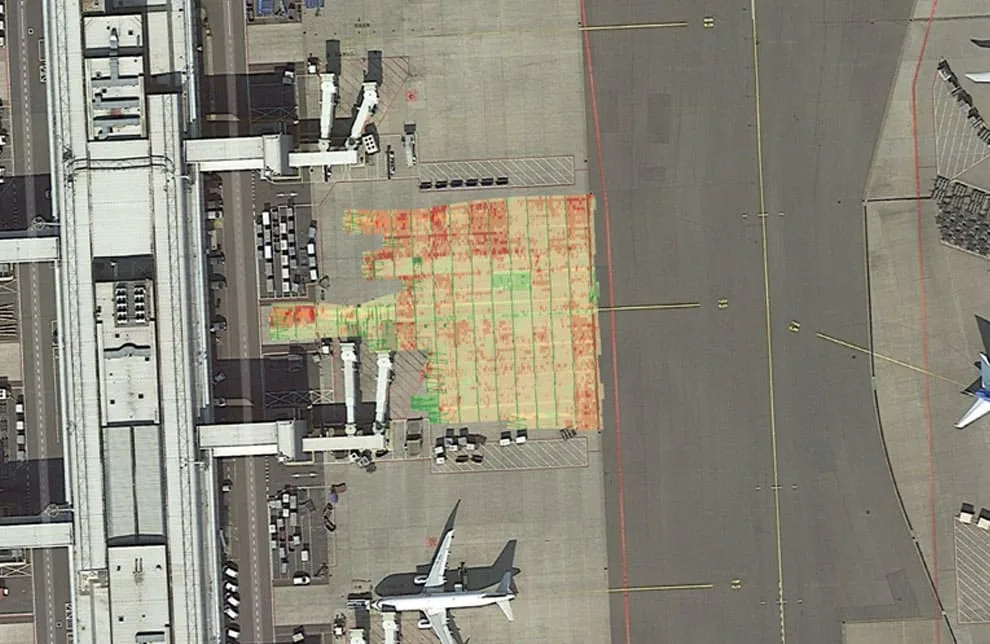
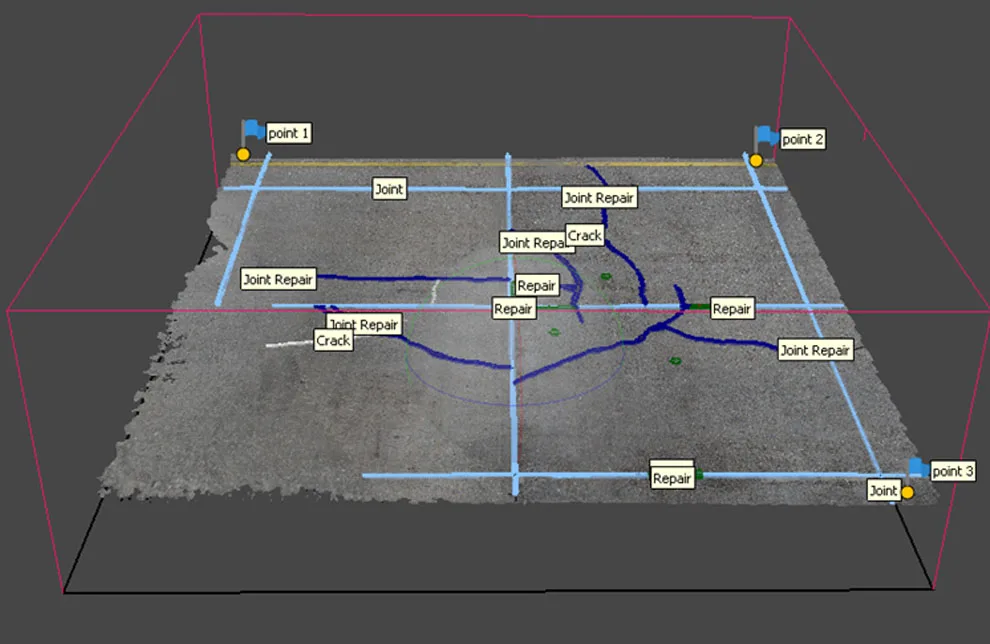
After a successful trial, Mavisoft, SWIC, VolkerInfra and Schiphol are entering a 5-year collaboration to inspect the concrete pavement of aircraft stands in an innovative manner. The most important outcome of this innovation is the extension of the concrete paving’s lifespan. This increases the availability of the aircraft stands while minimising costs, hindrance, materials and CO2 emissions.
During the trial period, three different techniques were tested in combination with damage detection and classification based on Artificial Intelligence (AI). The Laser Crack Measurement System 2 (LCMS-2) was found to work much better with the damage detection algorithm than capture with regular cameras mounted on a drone or inspection vehicle.
As an airport, Schiphol is obliged to regularly inspect the runways, taxiways and aircraft stands and to determine a so-called Pavement Condition Index (PCI) score. If the score is too low, that particular runway or aircraft stand may not be used by aircraft as it is not safe enough. AI has often been used in the inspection of asphalt pavements, but so far this has not been possible for concrete inspections. The combination of LCMS-2 and AI damage detection offers the following advantages:
These advantages mean we can go from sampling inspection to 100 percent inspection. This eliminates the need for the manual maintenance inspection on the worst-scoring aircraft stands following the PCI inspection. In addition, we limit discussion and research surrounding any necessary maintenance measures. By discovering and repairing early damage much earlier, we also considerably extend the lifespan of the concrete pavement.