In 2050, the day-to-day airside operations at Royal Schiphol Group will have changed significantly. By replacing ground handling equipment with an interconnected fleet of self-driving zero-emission vehicles, assets and robots, we aim to automate airside processes as an answer to several pressing challenges.
Continuous heavy lifting, working in tight spaces in uncomfortable positions, dragging, pushing, pulling and lifting load over the head strain the body and leads to chronic injuries and sick leave. Ageing population, slow job readiness due to extensive training and security checks make it difficult to find and retain airport staff
Emissions caused by airplane engines such as Co2, NOx, but also fine particles and ultra fine particles have an impact on the health of people working at airports. We need to implement innovative solutions that eliminate avoidable emissions and exposure and improve the air quality in those areas where people work.
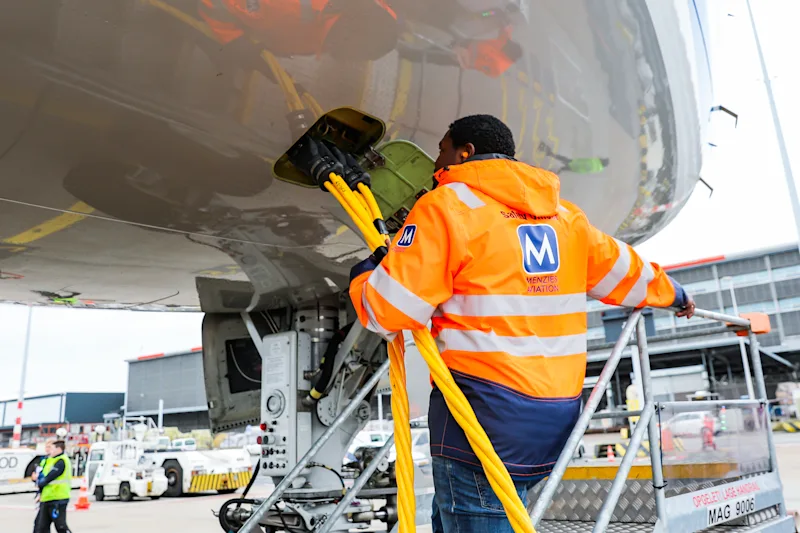
During the turnaround of the aircraft, a critical step is connecting to ground power to save fuel and prevent avoidable emissions that negatively impact air quality.
Traditionally, staff connect aircraft to power when they land and park at the apron, allowing the aircraft to keep electric systems running while the engines and Auxiliary Power Unit (APU) are shut down.
Staff shortages, unoptimized resourcing and heavy physical strain result in waiting aircraft with running engines and APU’s until staff is available and healthy to connect the aircraft to ground power, resulting in avoidable in emissions and a decreased operational performance.
Our ambition is to address these challenges with Autonomous Connection technology, having a direct impact on creating a healthy work environment as well as operational performance
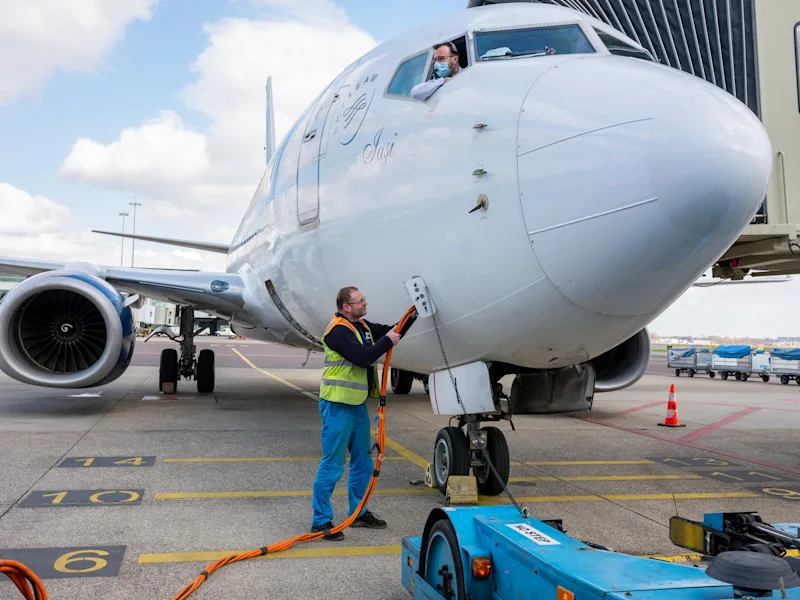
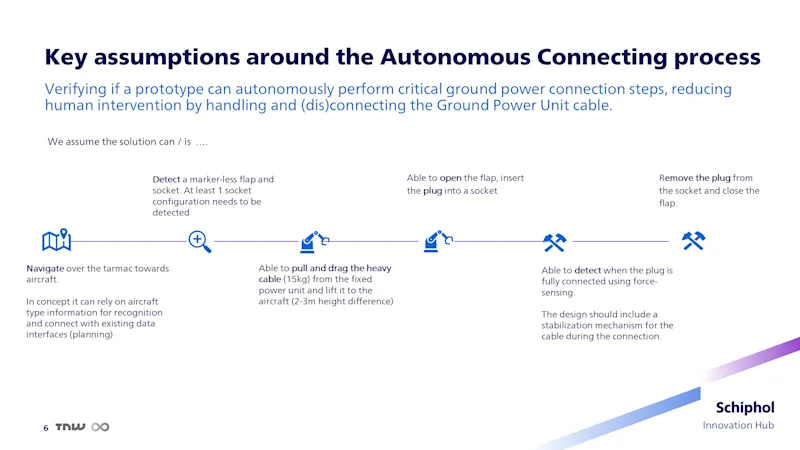
Together with Neura, our ambition is to address these challenges with Autonomous Connection technology, having a direct impact on creating a healthy work environment as well as operational performance. We are currently running a proof of Technology whose primary objective is to determine if it is technically feasible to autonomously connect aircraft to fixed power units. More specifically, we want to:
1. Proof the Technology to test whether a functional prototype can perform the critical steps of the ground power connecting process autonomously
2. Gather insights and data to guide the future development of autonomous connection systems. These insights should be universal and type agnostic.
3. Engage stakeholders and build familiarity with the challenges, risks, training needs associated with robotic product development.
The unique aspect of Neura is their ability to work across value streams simultaneously such as Navigation/mobility, AI, Engineering and software. This allows us as the client to track the progress of the technology altogether and watch it develop on a whole.
The unique aspect of Neura is their ability to work across value streams simultaneously such as Navigation/mobility, AI, Engineering and software. This allows us as the client to track the progress of the technology altogether and watch it develop on a whole.
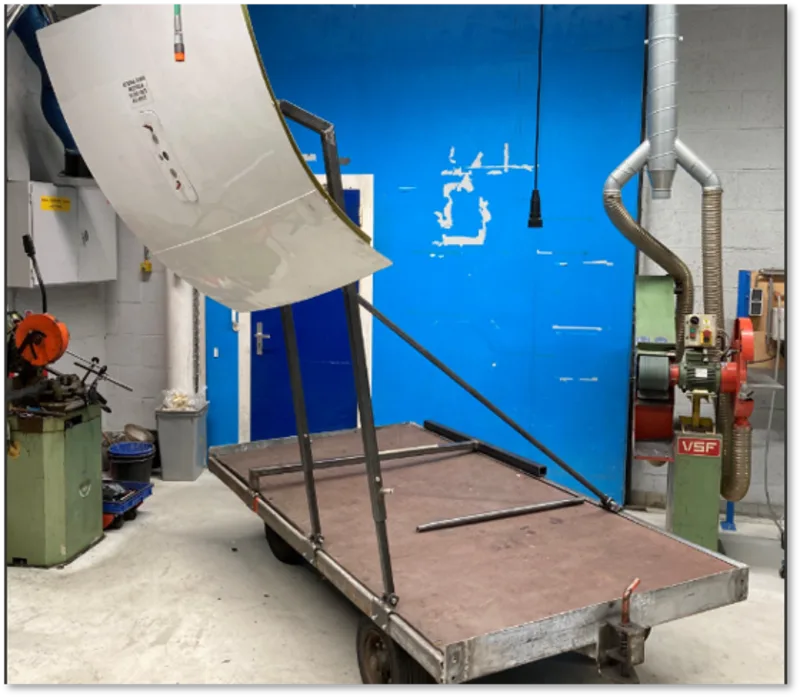
The final prototype will be tested on a Mockup of a boeing GPU socket within the facilities of Neura. There will be a webinar to showcase the capabilities of the technology and gain feedback on how to further develop this solution and tender it for a larger market. You can already view the progress so far in the video below, sent directly from Neura’s testing facility. We hope that you are just as interested in this technology as we are and sign up below to get more information on the project.