There was a route to Twente, a 25-minute flight, with an Embraer 110 carrying just 12 people. Try pitching that to an airline today!Erik Derogee
Blog · 26 september 2025 From paper lists to predictive precision
Erik Derogee reflects on 40 years of turnarounds at Schiphol
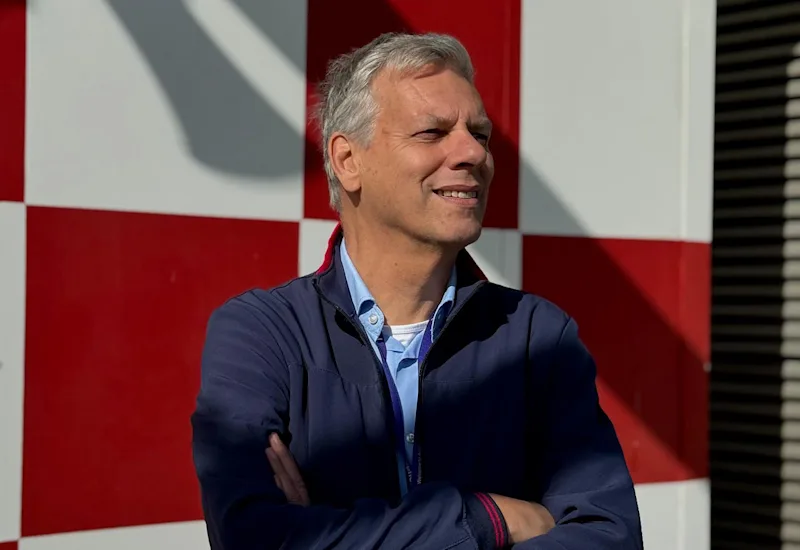
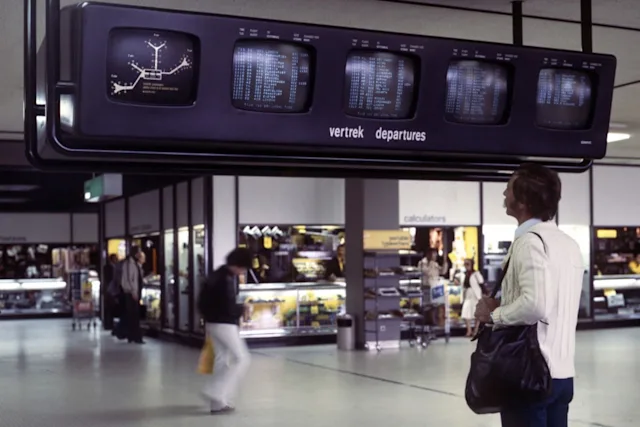
"We didn’t have PC’s, everything was written down. And if you wanted to know if a plane was ready? You just looked outside or went to the aircraft to ask." That’s how Erik Derogee, who began his career at Amsterdam Airport Schiphol in 1985, remembers his early days at airport operations.
Now, 40 years later, Derogee looks back on a career that spans the transformation of Schiphol from a compact hub into one of Europe’s busiest and most technologically advanced airports. We sat down with him to reflect on the evolution of airport operations: from paper flight lists to real-time turnaround predictions.
A different kind of airport
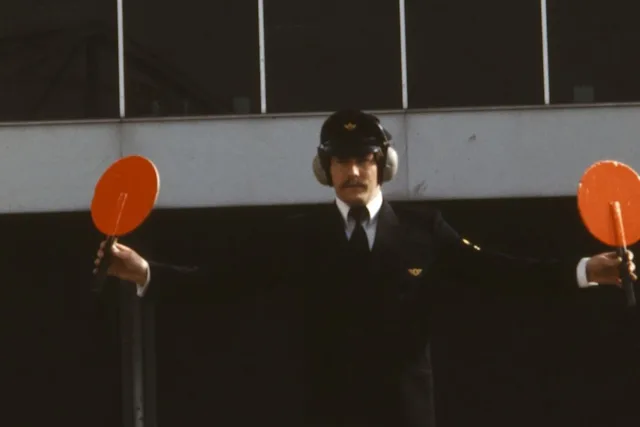
In 1985, when Derogee’s journey at Schiphol began, it was a very different place. “I think we had about 10 to 12 million passengers a year back then,” Derogee recalls. “Now there are more than 70 million. That’s a huge difference, operationally, too.” Derogee started at Schiphol as an apron officer, he then worked as an apron controller in the Apron Tower and in 1995 as an Airside Operations Manager. Today he represents Schiphol in the European SESAR-program developing solutions to improve the Air Traffic Management system.
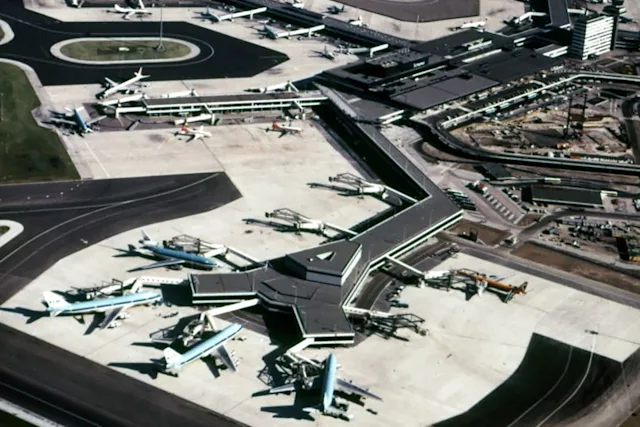
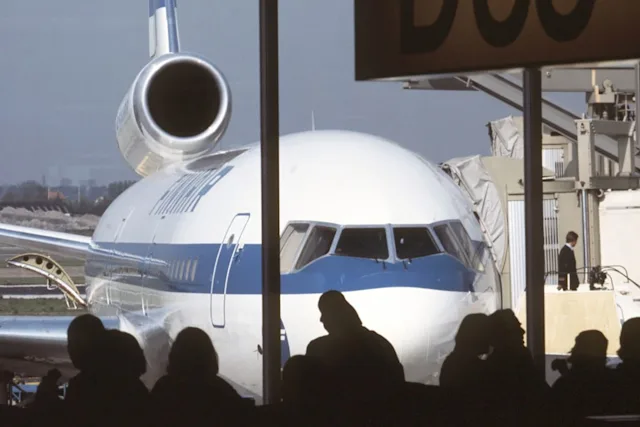
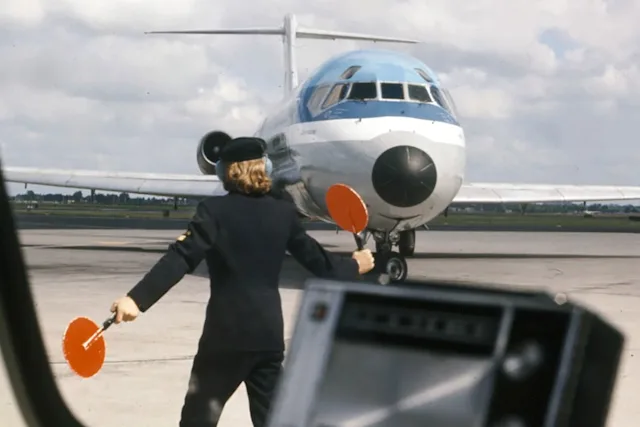
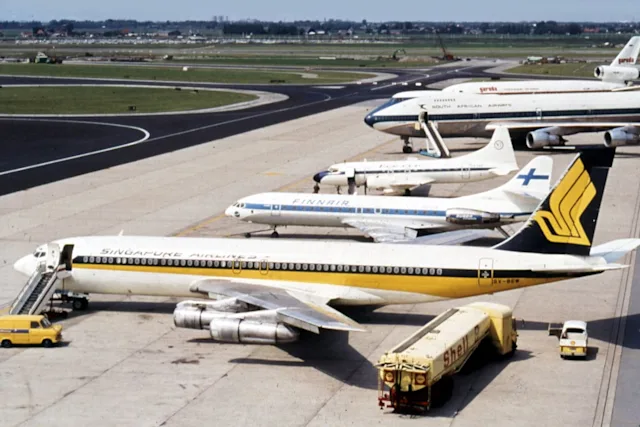
Back then, the airport’s layout was more compact, with just three piers in operation. At that time the construction of the E-pier had just started. Aircraft were smaller, and widebody jets were still a rarity. “A lot of flights were operated by Fokkers, Douglas Aircraft, and the old Boeings. Within the Netherlands we had flights operating short routes to places like Maastricht, Eindhoven, Groningen or Twente, a distance of about 100 miles,” he says.
Growth
As aircraft grew in size and range, so did the complexity of operations. During the years new aircraft types were introduced carrying more passenger. Bigger aircraft require more space at gates and more passengers ask for more space in the airport’s terminal. Schiphol airport was under construction permanently for years.
Turnarounds changed as well with a different apron lay-out using less space and the introduction of the new markings. The transition to a new hydrant system changed the way of refueling also in relation to the order of handling activities.
From Tupolevs to alliances
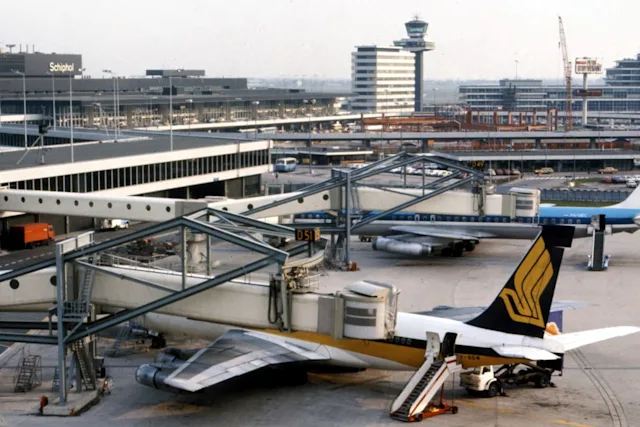
Back in the 90’s there was a big change in aviation at Schiphol, explains Derogee. The break-up of the USSR resulted in many new flights operating into Amsterdam from the new capitals: “Many flights were operated by aircraft from the former USSR introducing all kind of exotic aircraft type at our aprons (Tupolevs, Ilyushins, Antonovs and Yaks). During the start of this period there were quite some challenges for us; different aircraft dimension, other airline procedures, long unexpected turnarounds, and other operational challenges. It was common that turnaround times were not respected.”
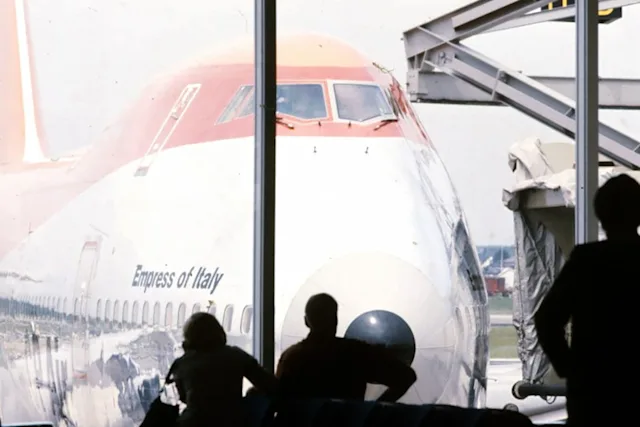
And, Derogee explains that flights from US-carriers T.W.A. and Panam also influenced the turnaround procedure during that time. Both Airlines operated a Boeing 727 for their flights from Amsterdam to Berlin and these aircraft could do things other planes could not: “When ready for taxiing to the runway they used a power-back procedure. There was no push-back truck needed to push the aircraft from the gate but the Boeing 727 was taxiing backwards using the engines in reverse. This was especially useful at gates with limited ground support. However, the maneuver was unusual at Schiphol and drew attention from apron staff, raising safety concerns due to strong jet blasts and requiring extra coordination to avoid disruptions. While efficient, it introduced complexity to an already busy apron environment.”
The rise of airline alliances and hub operations also reshaped Schiphol’s role. “We’ve always been a transfer airport, as we can’t rely on only the domestic passengers,” Derogee explains. “But now it’s on a much bigger scale. Delta, KLM, all the big carriers generate huge traffic, and most of it happens in a few peak moments. That adds a lot of complexity.”
Source: Stadsarchief Amsterdam / Schiphol
Source: Stadsarchief Amsterdam / Schiphol
Source: Stadsarchief Amsterdam / Schiphol
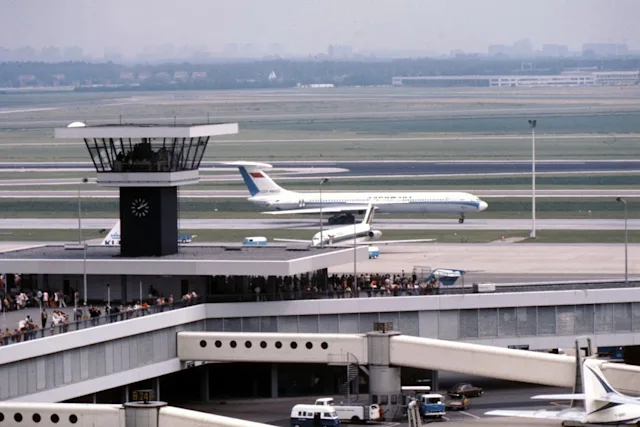
An Ilyushin 62 of Aeroflot taxiing across the B-pier at Schiphol, source: Stadsarchief Amsterdam / Schiphol
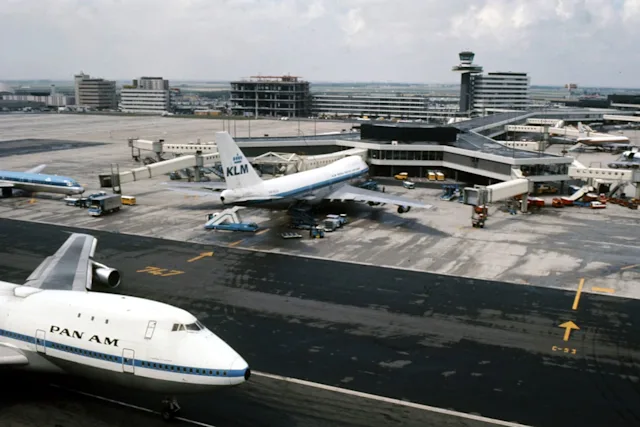
A Pan Am 747 taxing across the C-Pier, source: Stadsarchief Amsterdam / Schiphol. Source: Stadsarchief Amsterdam / Schiphol
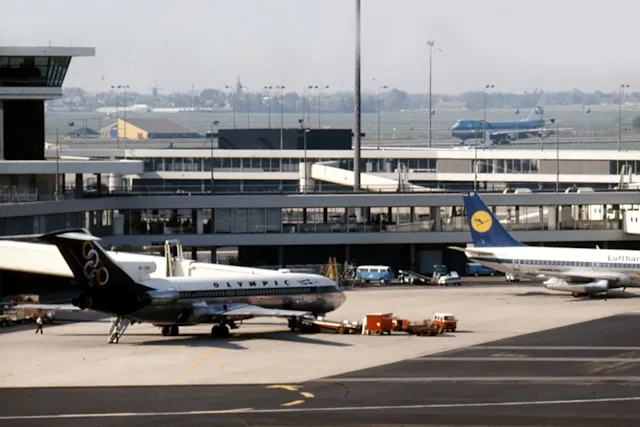
A Boeing 727 from Olympic Airways at Schiphol Airport, source: Stadsarchief Amsterdam / Schiphol
From guesswork to predictability
While the core process of a turnaround- deplaning, unloading, cleaning, and prepping- hasn’t changed much, the way it’s managed has transformed entirely.
“Today, everyone can see a flight’s schedule in the palm of their hand, including predicted TOBTs and delay reasons thanks to Deep Turnaround,” Derogee says. “Back then, it was all manual. Only at the Operational Centre’s the CISS (Central Information System Schiphol) was available as an operational database. Each evening we reviewed all flights for the next day. Inbound flights were printed on yellow paper and outbound flights on blue paper. The prints were distributed to the different operational partners. Everyone involved within operations used a copy so that they had an idea at what time planes would come and go, well, sort of. It was our hand-held version of real-time data, just 12 hours old. Of course CISS had the more actual information, but was not available for individual staff members”
But the information was often vague and up to interpretation: “When a plane took off from Paris, the local airline representative or ground handler sent a telex-message to the destination airport that it had left. But did that mean it left the gate or took off from the runway? We didn’t know. Everything was a guess. Expected arrival times were given with quite some margins.”
Uncertain gate allocations and reactive turnarounds
With so much uncertainty, gate allocation was changed quite often. “You never really knew when a plane would arrive, exactly. A Lufthansa flight might be expected first, but then a British Airways flight would show up instead. Gate planning was more of an art than a science.”
Turnarounds were equally reactive. “When we saw a catering truck still at the stand just before the scheduled off-block time, someone had to go checking it. The handler might say they needed 10 more minutes but that could mean 8 or 15. We had no insight into the processes of ground handlers or airlines.”
Right now, Deep Turnaround provides the airport with live insights and accurate predictions about the real TOBT. Which, according to Derogee promotes teamwork and makes a huge difference in OTP.
Before the 2000’s, the role of the airport was simply to provide the infrastructure and the passengers. Something that has changed considerably over the last 40 years.Erik Derogee
From silo’d IQ to focused collaboration
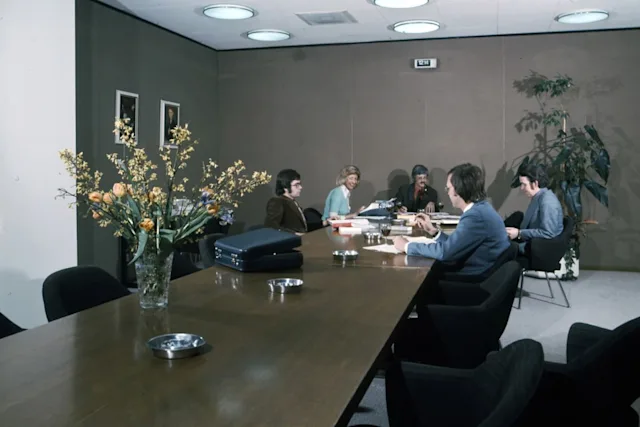
“Since everything used to be siloed,” Derogee says, “we couldn’t help or intervene. Airlines, ground handlers, air traffic control, the airport, we all worked separately. There wasn’t much collaboration.”
Today, that’s changed, explains Derogee: “Now we bring all stakeholders together on the day of operations to manage the airport collaboratively. Everyone understands that we’re in this together and that every process has an impact on the next one. If an airline doesn’t communicate a delay, it affects the next flight and the one after that. The same goes for a passenger flow disruption in the terminal. Schiphol offers a very elaborate API platform which everyone can tap into, which also includes the data from Deep Turnaround. The last decade was about ensuring we have the data, and right now, we’re improving the collaborating based on data.”
The way partners communicate has also changed a lot over the last four decades, shares Derogee: “Digitalisation changed the way of working. Today all stakeholders have a much better situational awareness on what is going on at Schiphol. Data- and information is shared by tools to partners and used collaboratively. The Airport Operations Plan (AOP) gives far better insights in operations. If you compare this to the past where communication was done via Radio-Telephony or phone calls via a landline, you can imagine how coordination was done in times of peak hours or disruptions where there was no time answering a phone call.”
The buffer era
“In the old days, uncertainty meant one thing: Buffer times. Lots of them. Flights were surrounded by additional buffer time in order to absorb uncertain delays: Enroute, taxi times, turnaround times, etc. But that meant capacity wasn’t used efficiently.”
Derogee explains that increased collaboration and the use of accurate data has made large buffer times a thing of the past. With better data and predictability, buffers are now reduced. “It’s too expensive to allow for long buffers. Deep Turnaround helps here too, TSAT is based on TOBT, and everyone works with the same data. That improves collaboration.”
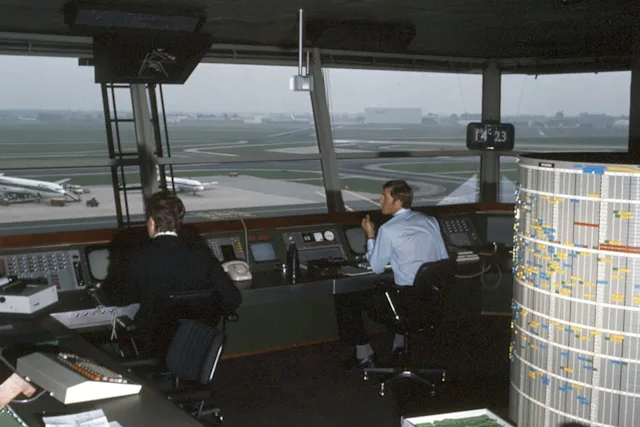
Dome at the D-pier where Derogee worked as an Apron Controller. Source: Stadsarchief Amsterdam / Schiphol
Source: Stadsarchief Amsterdam / Schiphol
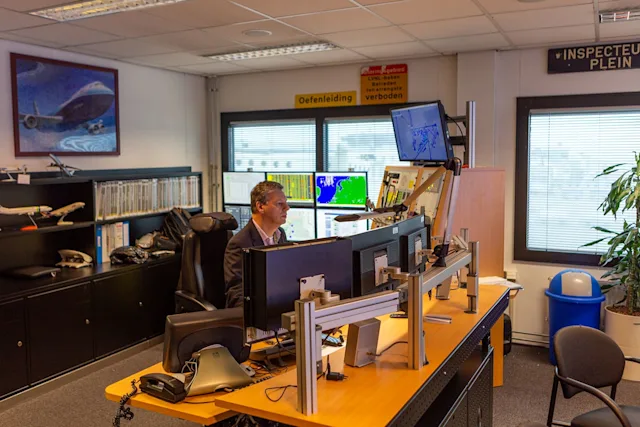
Erik Derogee as Airport Operations Manager in 2014 at Amsterdam Schiphol
Source: Stadsarchief Amsterdam / Schiphol
The power of CDM
Before Collaborative Decision Making (CDM), even basic terms like “arrival time” were fuzzy. “Did it mean the landing time on the runway? Parking at the gate? Passenger in the terminal? Everyone had their own definition,” Derogee shares.
CDM standardised those definitions and improved data sharing in Europe. Schiphol began implementing CDM around 2010 and fully integrated into the European A-CDM system by 2018. Today it’s used at over 35 airports.
“CDM was the start,” Derogee says. “But Deep Turnaround (also see How Deep Turnaround enhanced A-CDM efficiency) is one of the next steps. It helps predict TOBT more accurately. If handlers follow that, we don’t have to keep switching plans. That stability is crucial.”
Airport-to-airport coordination
Derogee is now working on several European SESAR-projects which aims to make Air Traffic Management even more precise and more predictable. “One of the things we are developing is a direct Airport-to-Airport coordination: When capacity is tight, we currently go to Air Traffic Control and ask for regulation, reducing inbound flights. But that affects everyone. Now, Schiphol is exploring more targeted solutions. “We’re testing with airports like Athens, Brussels, and Copenhagen. If a delay only affects a specific airline or handler, we try to isolate those flights, maybe delay them 20 minutes, so the rest can operate on time.”
It’s a smarter, more surgical approach to managing traffic. And it’s just one more step in Schiphol’s journey from paper lists to predictive precision.
And there’s more to come, shares Derogee: “In a new SESAR-project we will develop new ways of looking at Total Airport Management introducing a general prediction view of all processes. Where Deep Turnaround already gives a prediction of the time handling will be ready, the next step will be to connect this to other operational processes, like for example passenger boarding.
Note: Deep Turnaround is implemented at, and supporting, multiple airports. If your airport is also looking for ways to improve turnaround operations through insights and collaboration, simply request a Deep Turnaround demonstration.
Source: Stadsarchief Amsterdam / Schiphol
Source: Stadsarchief Amsterdam / Schiphol
Source: Stadsarchief Amsterdam / Schiphol
Source: Stadsarchief Amsterdam / Schiphol
Subscribe to Aviation Solutions updates:
Discover what we're up to and receive a quarterly digest of everything related to Aviation Solutions.