Respiratory protection
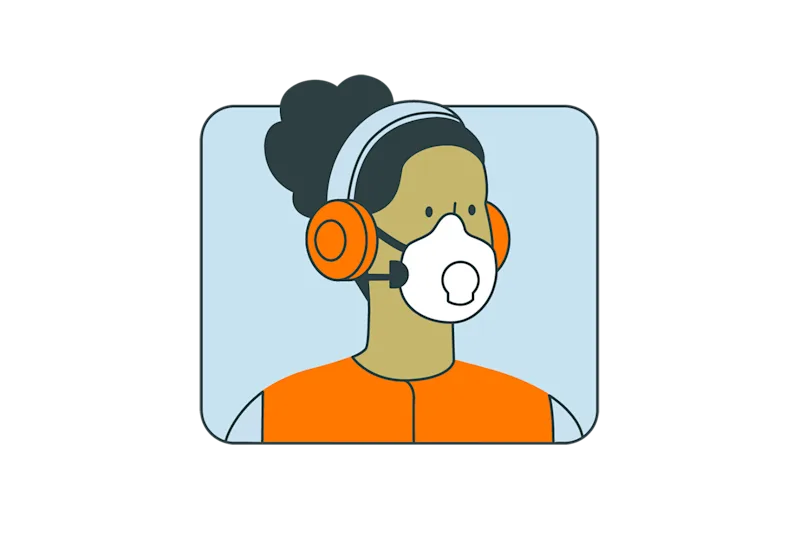
Personal protective equipment (PPE) is available to all apron workers who wish to protect themselves against emissions from aircraft and diesel engines.
Implementing all measures properly and safely takes time. That’s why wearing personal respiratory protection is an important intermediate step. Respiratory protection is an effective way to protect employees until the other measures are demonstrably effective.
Schiphol employees working on airside are strongly advised to wear respiratory protection at the aircraft stands (VOP). This advice also applies to other outdoor locations on airside near running aircraft and diesel engines. The more often and longer you wear respiratory protection, the better you are protected against ultrafine particles.
Employees from many different companies work on airside. Other employers are also looking at how they can offer a healthy working environment to their employees. If you are working outdoors on airside and would like to know more about respiratory protection, please contact your employer.
Effective and safe
In 2023 and 2024, Schiphol tested various types of respiratory protection equipment for safety and comfort; first with its own employees and later in collaboration with other employers at the airport. All respiratory protection items were also tested for effectiveness by an external party. After the tests, a selection of reliable and well-functioning equipment (that blocks at least 96% of ultrafine particles from the air when worn properly) was made.
Types of protection
There are different types of respiratory protection. You can distinguish between non-motorised respiratory protection (such as FFP3 masks), or motorised respiratory protection (masks with a motor). An FFP3 mask is familiar to many and easy to use. Motorised respiratory protection has the advantage of not having to breathe through a filter yourself. As a result, you experience no breathing resistance. The motor sucks the outside air through the filter and blows clean air into the mask. Which respiratory protection a person likes often depends on their job, facial structure and personal preference.