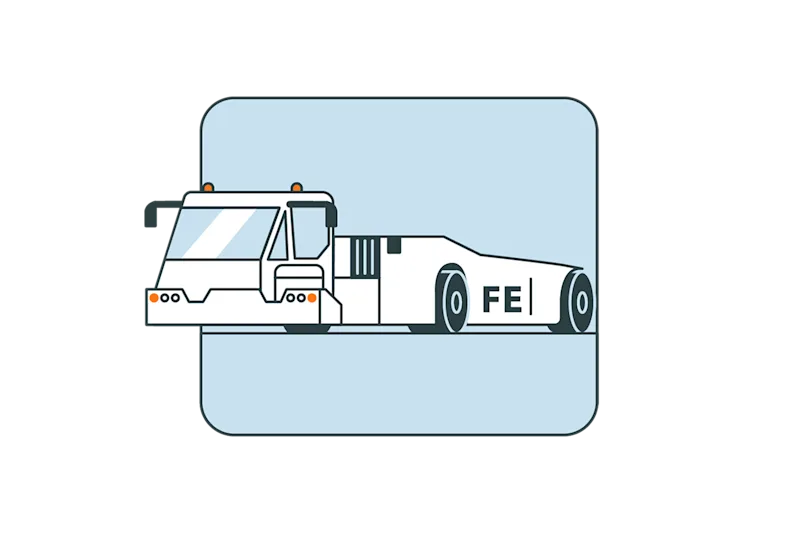
We are deploying taxi tow vehicles. These can tow aircraft all the way to the runway without them starting their main engines.
How does a Taxibot work?
A TaxiBot is a tow vehicle that moves aircraft from the gate to the runway at speeds of up to 23 knots (42 km/h). The pilot controls the TaxiBot from the cockpit. The aircraft engines are only started shortly before take‑off. Inside the TaxiBot is an employee who uncouples it and drives it back to the gate for the next flight.
Deployment and expansion
At Schiphol, we use the TaxiBot for flights departing from the Polderbaan Runway, which has the longest taxi time. Because aircraft do not use their engines while taxiing, they save up to 65% fuel. This results in lower emissions and a healthier working environment on the apron.
Taxiing with a TaxiBot is new in aviation. That’s why we are expanding its use step by step.
- Since 2022, two hybrid TaxiBots have been operating for KLM (Boeing 737).
- Since May 2026, the world’s first fully electric TaxiBot has been operating for easyJet (Airbus A320).
More electric TaxiBots will be added in the future, allowing other aircraft types to use them as well. Schiphol is working on this together with partners including KLM Cityhopper (Embraer) and Transavia (Boeing 737).
Collaboration
The introduction of the TaxiBot into airport operations is a unique collaboration between Schiphol and KLM, LVNL, Transavia, TUI, Swissport, easyJet, and the ground handlers Menzies, VIGGO, dnata and KLM Ground Services.