Blog · 3 September TaxiBot increasingly visible at Schiphol
You might have already seen it on your way to the Polderbaan Runway: the TaxiBot. What began as a trial a few years ago is gradually becoming a more prominent part of day-to-day operations at Schiphol. This brings us ever closer to more sustainable taxiing.
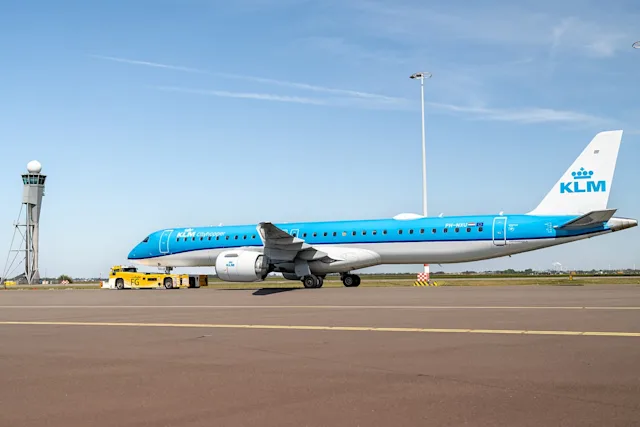
© Jens van Houwelingen
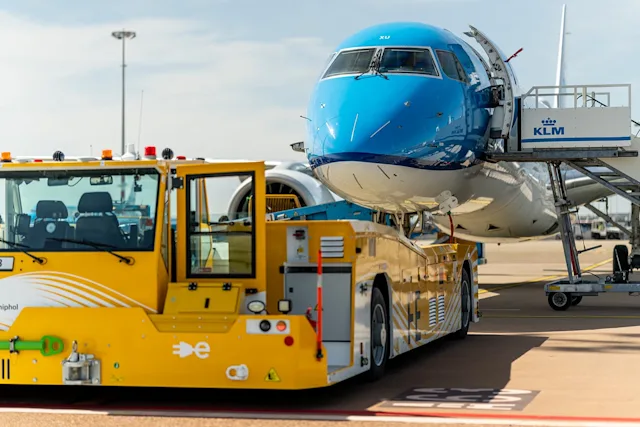
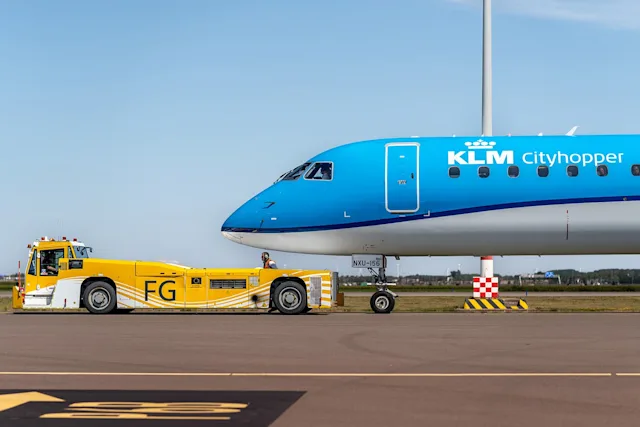
More planes using the TaxiBot
Since 2024, we have been operating two hybrid TaxiBots for KLM’s Boeing 737 passenger flights.
This year, an important development has taken place. The world’s first fully electric TaxiBot has been operating at Schiphol since May. We deploy it, in collaboration with easyJet, for Airbus A320 aircraft departing from the Polderbaan Runway. This electric TaxiBot now makes several journeys a day. And easyJet is expanding its deployment to include four Airbus A320neo aircraft.
But we’re not stopping there. Together with KLM we are testing the TaxiBot with KLM Cityhopper’s Embraer planes. This is an important step, as KLM Cityhopper operates the largest Embraer fleet in Europe. These aircraft frequently fly to and from Schiphol, creating more opportunities to use the TaxiBot. Transavia is also part of the further rollout with its Boeing 737 fleet. Step by step, this will enable a wider deployment of TaxiBots across different aircraft types and airlines.
What’s a TaxiBot?
A TaxiBot is a special tow vehicle that takes aircraft from the gate to the runway. It’s different from a regular taxi tow vehicle as the pilot operates the TaxiBot themselves from the cockpit. This means that the engines can remain switched off during much of the taxiing process and only get switched on shortly before departure. After disconnecting the TaxiBot, an employee drives it back to the gate for the next flight.
The TaxiBot is particularly beneficial on the Polderbaan, as this runway has the longest taxi time at Schiphol. By using the TaxiBot aircraft use less kerosene during taxiing. This leads to a reduction in CO₂, nitrogen oxides (NOx) and (ultra)fine particle emissions. And there’s less noise. This contributes to a cleaner, quieter and more pleasant working environment for the people who work on the apron.
From trials to increasing daily deployment
The first TaxiBot trial at Schiphol took place in 2020. We have learnt a great deal since then. After all, deploying a new vehicle at an airport is not simply a matter of connecting it and driving off. Procedures need to be adapted, Air Traffic Control the Netherlands (LVNL) must integrate the TaxiBot into its operations, and pilots and staff must be trained. Safety in operations is always the top priority. Thanks to these preparations, we are now able to use the TaxiBot more frequently in day-to-day operations.
More electric TaxiBots on the way
At the moment, there are two Hybrid and one fully electric TaxiBots at Schiphol. Three fully electric TaxiBots will arrive later this year. That means we can continue conducting trials, gain more experience and expand the deployment to include more aircraft types.
The TaxiBot is becoming increasingly visible at Schiphol. And more importantly, we’re gaining ever more experience with a way of taxiing that allows aircraft engines to remain switched off for longer. That means less fuel consumption, lower emissions and reduced noise on the ground. Together with airlines, ground handling companies and LVNL we continue to work towards a cleaner, healthier and quieter airport.