Blog · 22 May Hidden nature at Schiphol: from orchids to weasels
Did you know that all kinds of special plants and animals live at Schiphol? From small mustelids to orchids that you don't often see in the Netherlands, such as the bee orchid. Biodiversity is important for Schiphol. We want to support nature at and around the airport because a healthy ecosystem contributes to a better living environment. At the same time, nature also helps us with safe operations. For instance, some animal species help us naturally deter birds from the airport grounds. This is important for flight safety. Let us tell you about some more examples!
Small mustelids
At Schiphol, weasels, stoats and polecats play an important role in flight safety. These small mustelids hunt mice. And it is mice that attract large birds of prey, which can pose a risk to air traffic. By keeping the mouse population low in a natural way, mustelids make the terrain less attractive to birds.
The stone marten is also regularly found at Schiphol. The presence of these animals shows that a healthy and diverse ecosystem exists at the airport. Schiphol supports these natural allies by installing brushwood piles where mustelids can find shelter and a place to nest. In this way, we strengthen local biodiversity and contribute to safe take-offs and landings.
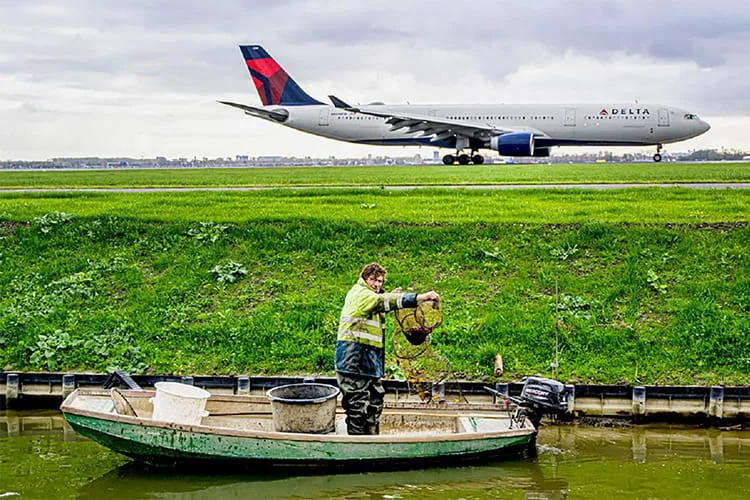
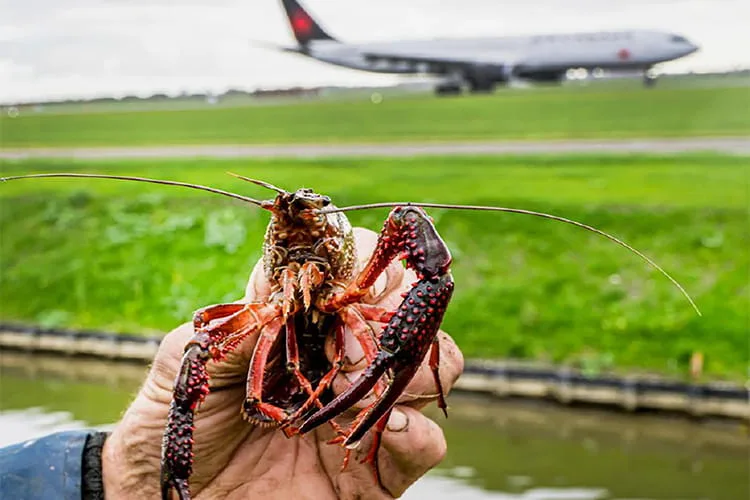
Red American crayfish
Not all animals at Schiphol benefit nature and flight safety. The red American crayfish is an invasive species and actually poses a risk. That is why Schiphol has been employing professional fishermen since 2023 to actively combat this species. The crayfish attract large birds, such as herons, gulls and birds of prey. They view crayfish as an easy food source. Because these birds, due to their size, pose an increased risk of bird strikes, Schiphol aims to reduce the attractiveness of the site by removing the crayfish.
The crayfish also cause damage in the waterways. They cut up aquatic plants, churn up the bottom and make the water turbid. As a result, water quality deteriorates. They also eat fish and insect eggs, giving other species fewer opportunities. Biodiversity in and around the water consequently becomes unbalanced. Moreover, the crayfish spread rapidly. By actively combating this invasive species, we protect local nature and keep the airport safe.
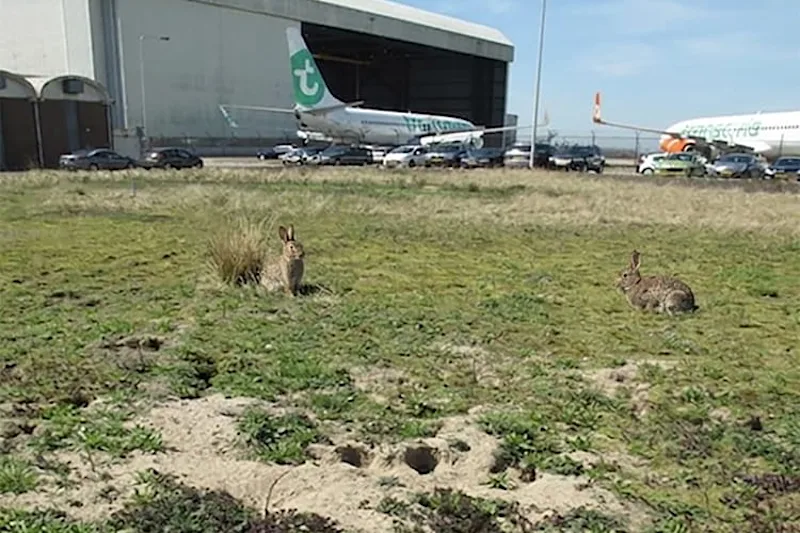
Konijnen
Op Schiphol leeft een grote populatie konijnen. Dat komt door de gunstige omstandigheden op het terrein: een zandige ondergrond voor goede drainage, uitgestrekte grasvelden en het actieve werk van Bird Control. Omdat Bird Control roofvogels verjaagt om de vliegveiligheid te waarborgen, hebben konijnen op de luchthaven minder natuurlijke vijanden. Toch vormen konijnen ook een risico voor de operatie. Ze trekken, ondanks het goede werk van Bird Control, wel roofvogels aan en hun graafgedrag kan schade veroorzaken aan de infrastructuur rond start- en landingsbanen. Daarom kijkt Schiphol naar een duurzamere aanpak.
In grote delen van Nederland gaat het slecht met het konijn, onder meer door de ziekte myxomatose. Het wilde konijn staat inmiddels op de Rode Lijst. Vooral in duingebieden zijn konijnen belangrijk, omdat hun graas- en graafgedrag helpt om de biodiversiteit daar in stand te houden. Het ecosysteem in de duinen is verstoord. Schiphol kan helpen om de natuur te herstellen hierin het verschil maken.
Door konijnen te vangen en lokaal uit te zetten in de duinen, werken we op een diervriendelijke manier aan vliegveiligheid én dragen we bij aan natuurherstel. Voordat de dieren worden verplaatst, krijgen ze een vaccinatie tegen myxomatose. Zo vergroten we hun kans op een goede start in hun nieuwe leefgebied. Natuurbeheer houdt in de gaten of de konijnen kunnen wennen in hun nieuwe leefgebied en of het ecosysteem weer in balans komt.
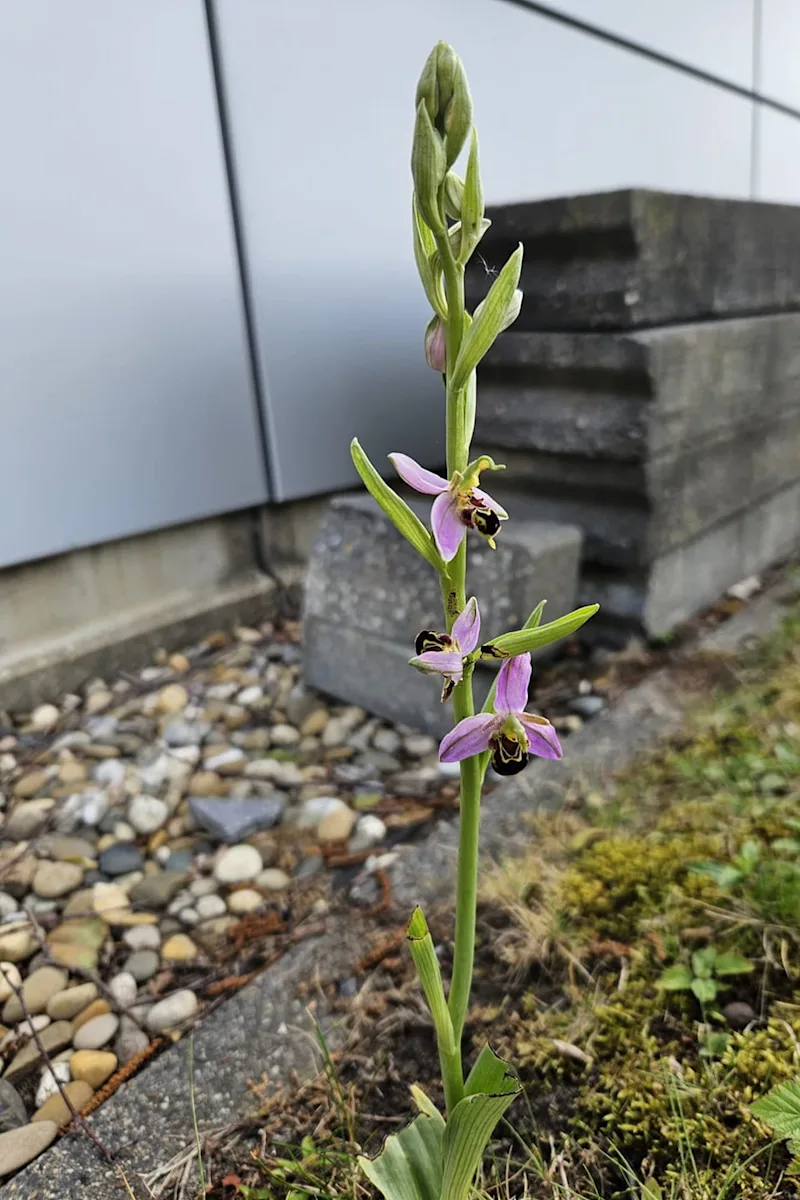
Orchids
Between the asphalt, the buildings, and the logistics, you can also find a surprising number of special plants at Schiphol. The airport grounds are an unexpected place where various species come into bloom.
A striking example is the bee orchid. This special orchid grows at multiple locations at Schiphol. In the park surrounding Royal Schiphol Group Headquarters, dozens of specimens even stand among the grass and under the birch trees. Other orchids also feel at home at the airport. The marsh helleborine grows here, an elegant species that demonstrates that the polder soil and green management provide space for unique flora. The southern marsh orchid is also found on the site.
These delicate plants show that Schiphol is more than just infrastructure for aircraft. Valuable nature emerges in unexpected places. And it is precisely there that biodiversity is given the space to grow.
Nature at Schiphol is sometimes visible, sometimes hidden, but always of value. By closely observing what lives and grows at the airport, for example by installing wildlife cameras, we can protect biodiversity, strengthen the environment and continue working towards a safe airport. This gives nature a chance to thrive at Schiphol too.