Blog  ·  16 April

Gaining insight into aircraft waste with an innovative new waste scanner

At Schiphol, we are always exploring ways to reduce residual waste and increase recycling rates. This marks an important step forward. Together with Renewi and Transavia, we are launching a pilot with an innovative automated waste scanner that provides detailed insight into the composition of aircraft waste. In addition, the automated waste scanner will be used to analyse multiple waste streams across the airport.

Pilot innovative new waste scanner

From waste to insight

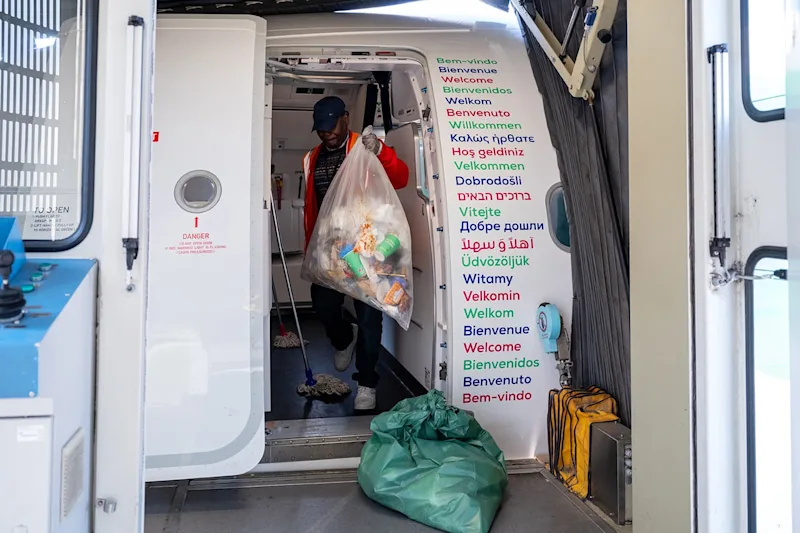
During the test, waste from Transavia flights within Europe will be carefully tracked and analysed. Transavia separates onboard waste into residual waste and recyclable streams and currently recycles approximately 40% of its total waste.

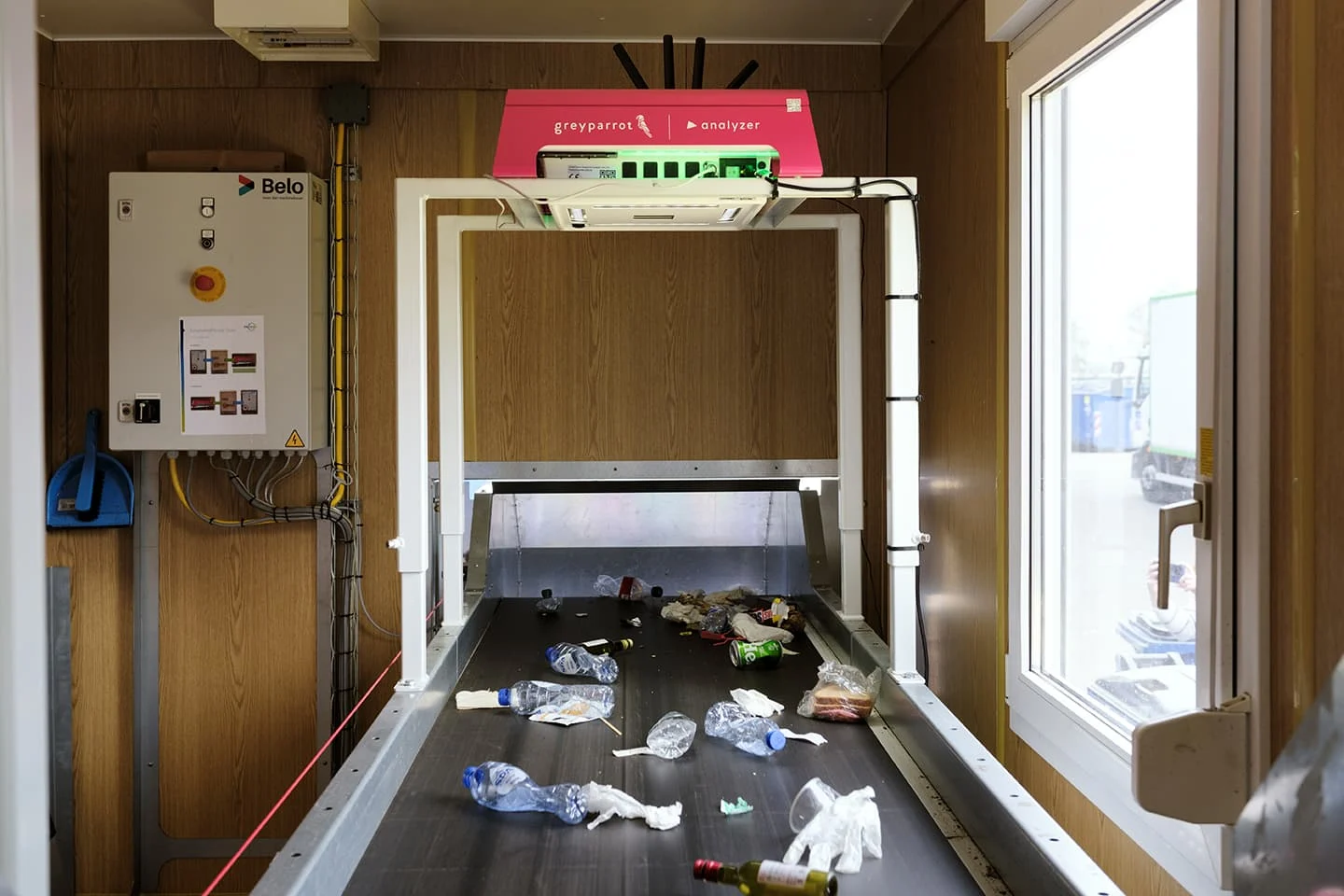
In the pilot, both waste streams are included. To ensure proper handling on the ground, cleaning partner Klüh labels the waste bags with stickers containing flight information.This ensures we know exactly where the waste comes from and that it can be processed correctly, in line with European regulations for in-flight catering waste. Using advanced automated scanning technology, Renewi can accurately determine what is inside each waste bag. This providesus with a new level of insight.
From manual to automated scanning

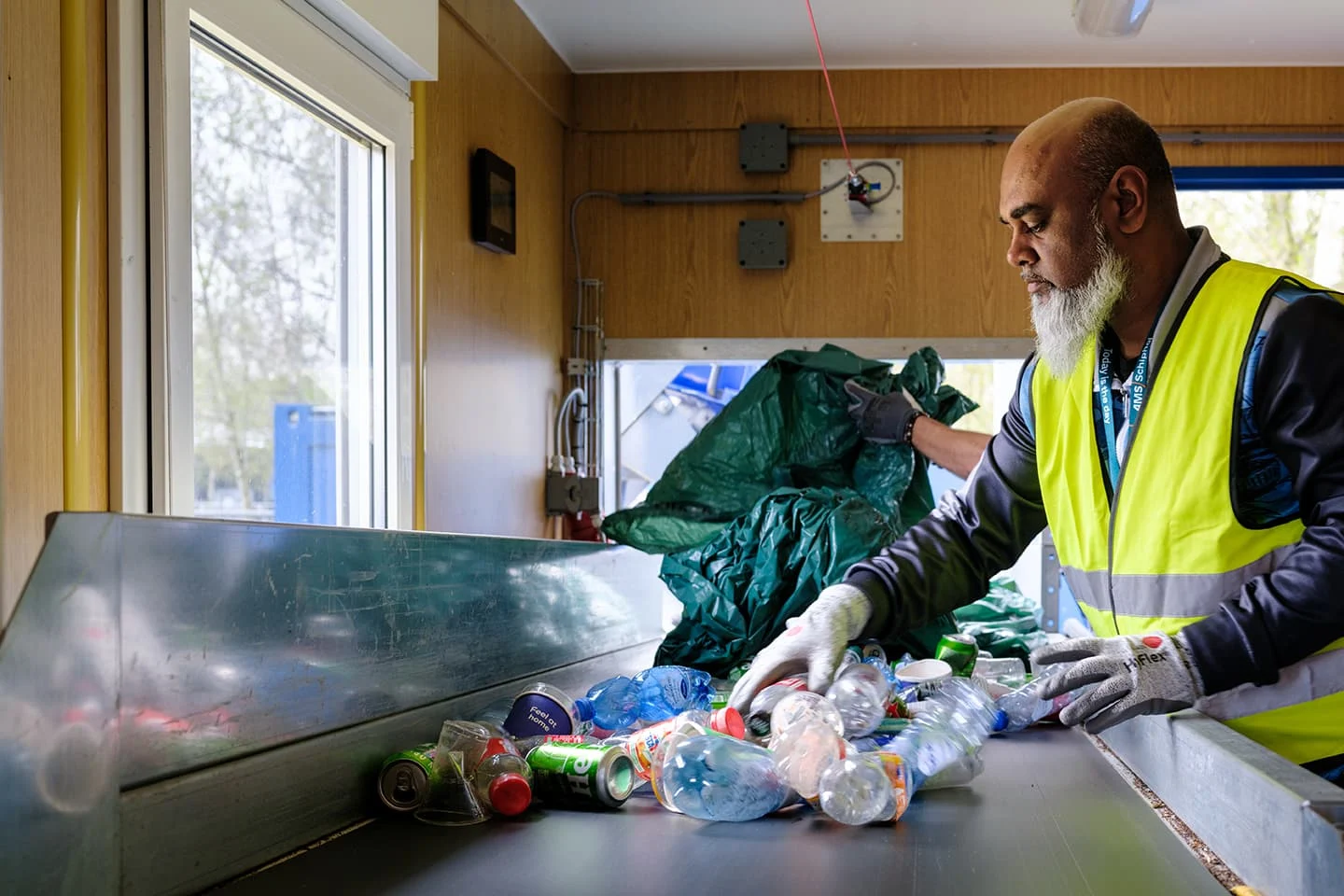
Until now, waste scans at Schiphol were carried out manually. While these remain important, for example, in raising awareness, they are labour-intensive and difficult to scale.

The new automated scanner makes this process significantly more efficient. Where manual scans can take an entire day, the automated system scans three 660-litre containers in just 45 minutes. In addition, the system automatically generates reports, giving Schiphol immediate access to up-to-date and accurate data to improve waste separation and optimise processes.

Pilot innovative new waste scannerPilot innovative new waste scanner

Data-driven reduction of residual waste

Thanks to the automated waste scanner, we now have access to large volumes of detailed insights, including material types, contamination levels and opportunities for reuse.

This information is used to drive targeted improvements. The data also helps optimise waste processes, inform employees and strengthen collaboration with recycling partners.

From data to action

The real value of this pilot with Transavia, focused on onboard catering waste, lies in how we use these insights. By better understanding what and how it is discarded on board, Transavia can implement targeted improvements. These include adjusting the onboard assortment, reducing food waste and improving the separation of waste streams.

First step, broader ambition

Transavia is the first airline to participate in this pilot. Other airlines are expected to join in the coming period. The pilot will run for six months. If successful, it could form the basis for broader implementation at Schiphol.

Working together towards circular aviation

By 2030, Schiphol aims to significantly increase its recycling rate and contribute to waste reduction, lower CO₂ emissions and the preservation of raw materials. This initiative shows how collaboration between partners helps accelerate circular solutions. By turning insights into action, we take another step towards reducing impact and building a more sustainable aviation sector.