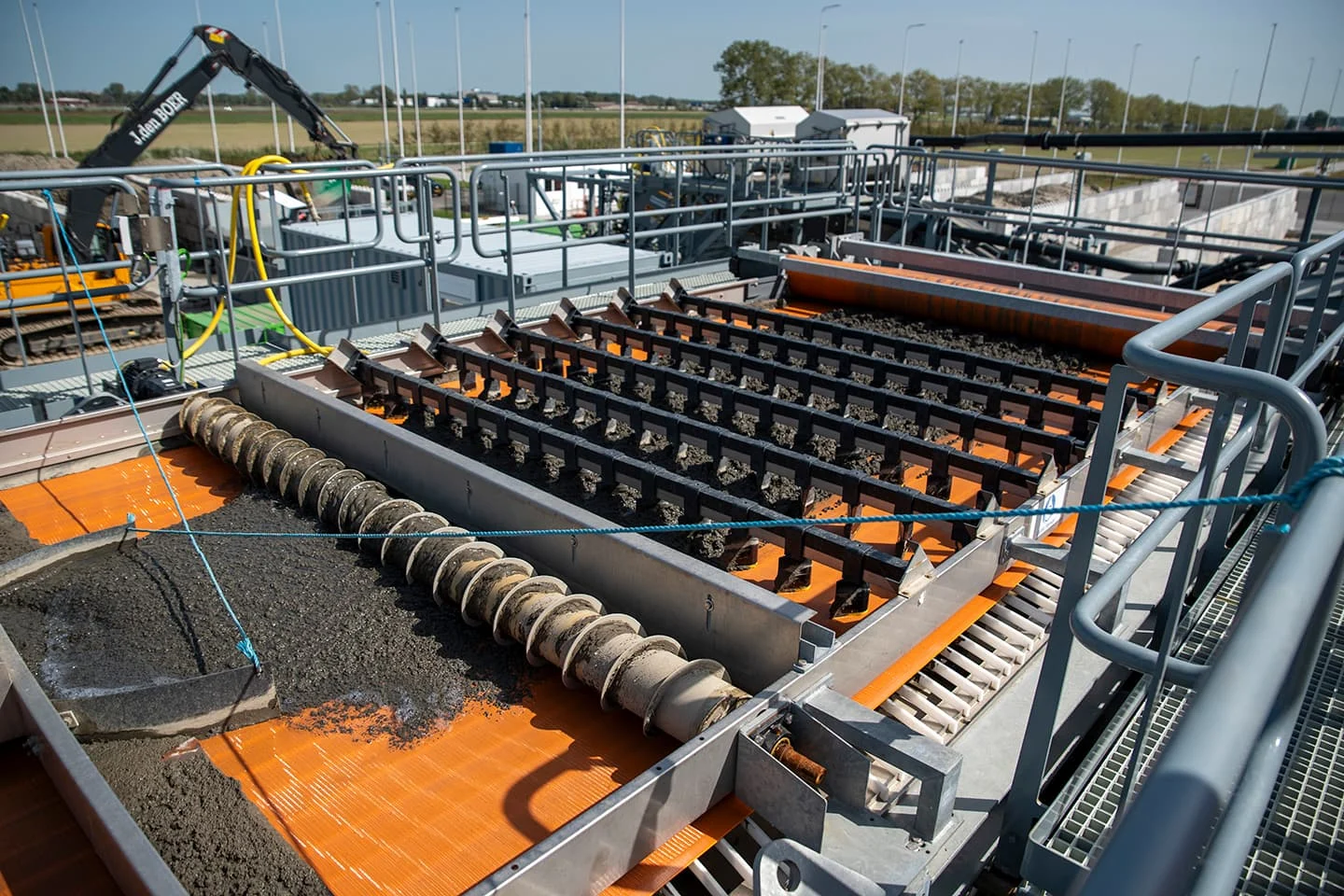
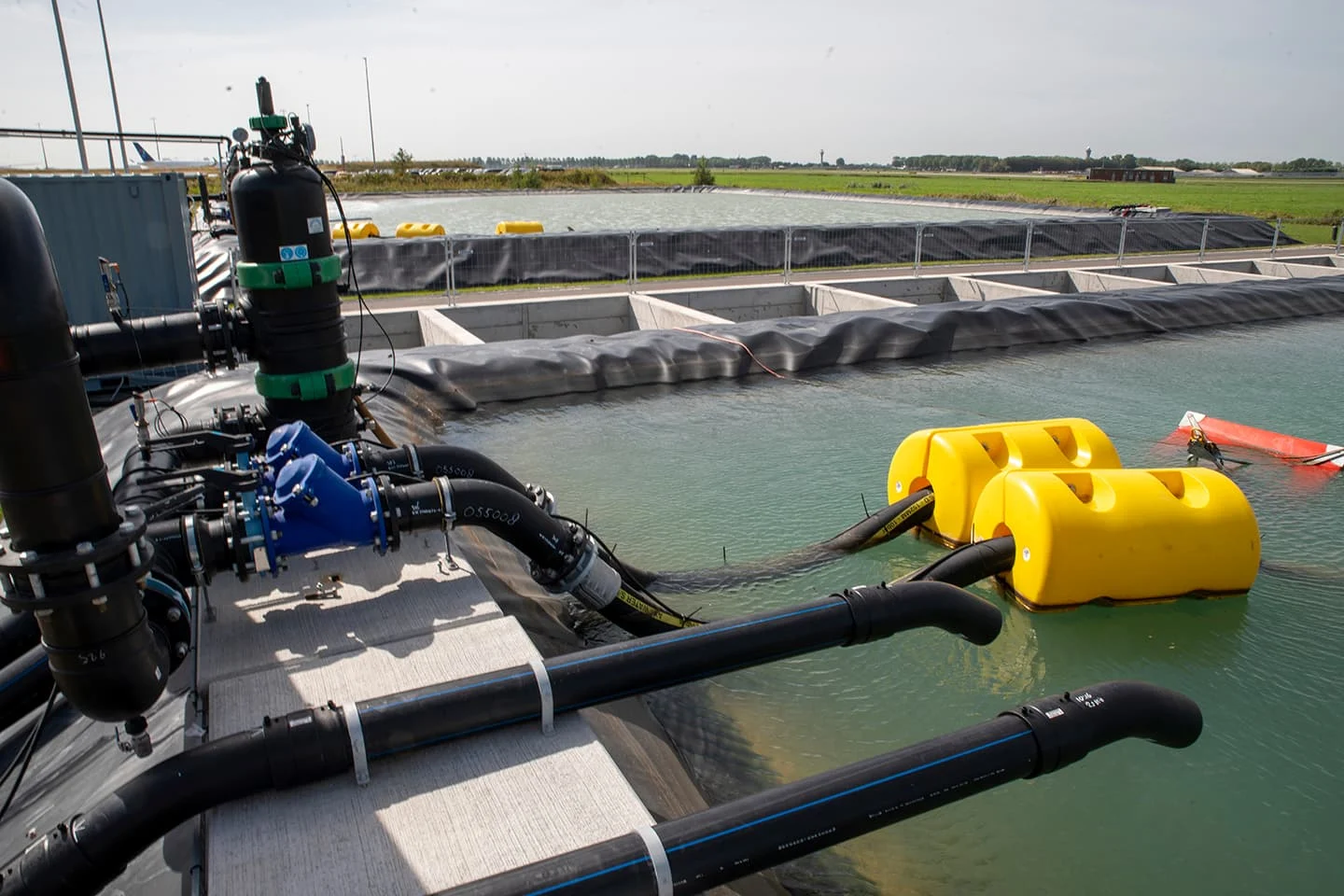
The PFAS soil treatment facility next to the Zwanenburgbaan Runway was officially opened on 10 September. After years of research, testing, consultation with the local community and preparation, this marks an important milestone. Over the coming years, we will be treating PFAS-contaminated soil that has been excavated during works at Schiphol. This will enable us to remove some of the PFAS from the environment and reuse much of the soil at the airport.
The facility has been operational since this summer. The first batch of soil was fed into the system in July, and the remediation process is now well under way. Over the next three years, we aim to process approximately 200,000 tonnes of PFAS-contaminated soil that is currently still stored in temporary storage sites at Schiphol.
The soil at Schiphol consists of approximately 80% sand and 20% fine materials, such as clay and organic matter. During the treatment process, these components are separated and the soil is effectively washed. The PFAS binds to the water during this process.
Around 80% of the material leaves the facility as reusable sand. This sand can be used again in projects at Schiphol, reducing the need to import new raw materials and limiting the amount of unusable material sent off site. The first batch of treated sand is expected to be used this autumn.
The water used to clean the soil remains within a closed-loop system and is continuously reused. PFAS is removed from the water using activated carbon filters. These filters are then used by a specialised contractor as fuel in a cement kiln. Sustained heating at high temperatures breaks down the PFAS compounds into harmless fluoride salts and minerals.
After the soil has been treated, around 20% remains as fine residual sludge that still contains PFAS. This material is transported to a licensed landfill site. However, we are also looking for more sustainable alternatives. For example, together with Claybens, we are exploring the possibility of turning this residual material into bricks.
PFAS is the collective name for a group of substances that have been used in a wide range of everyday products since the 1960s, including firefighting foam. In the past, Schiphol used this foam, in line with the recommendations of the time, to combat liquid fuel fires. Today, Schiphol’s fire brigade no longer uses PFAS-containing foam. However, the contamination caused in the past remains, and we are taking responsibility for it.
Soil excavated during construction projects at Schiphol may also contain PFAS. While this soil could be transported elsewhere for treatment, we chose to invest in our own facility so that it can be cleaned on site. This significantly reduces transport movements, helps tackle the contamination at its source and enables valuable materials to be reused in our construction projects.
The facility uses a proven soil treatment technology developed by DEME. Schiphol operates the sixth installation of its kind and the second in the Netherlands. To the best of our knowledge, this approach is not being applied on this scale at any other airport.
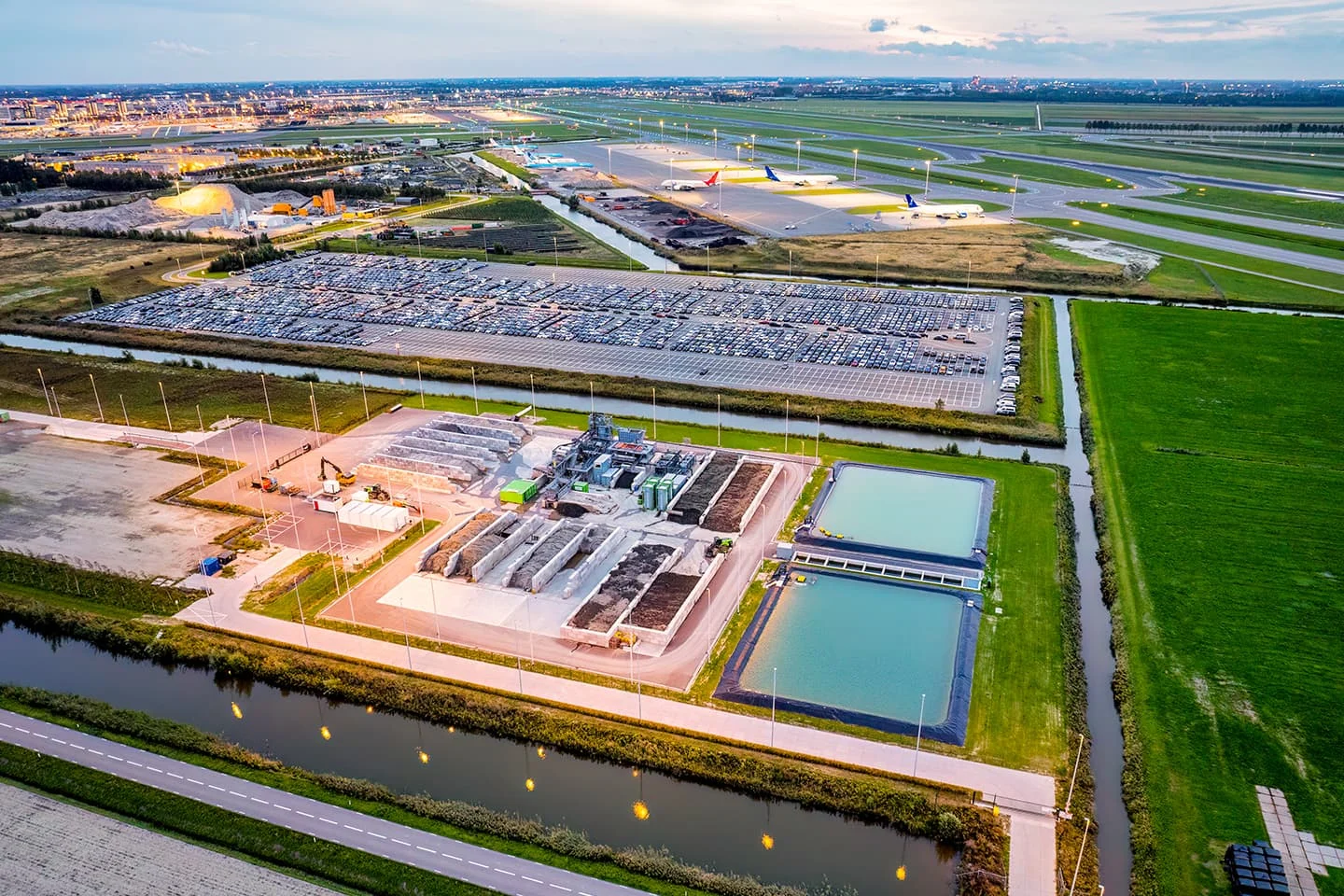
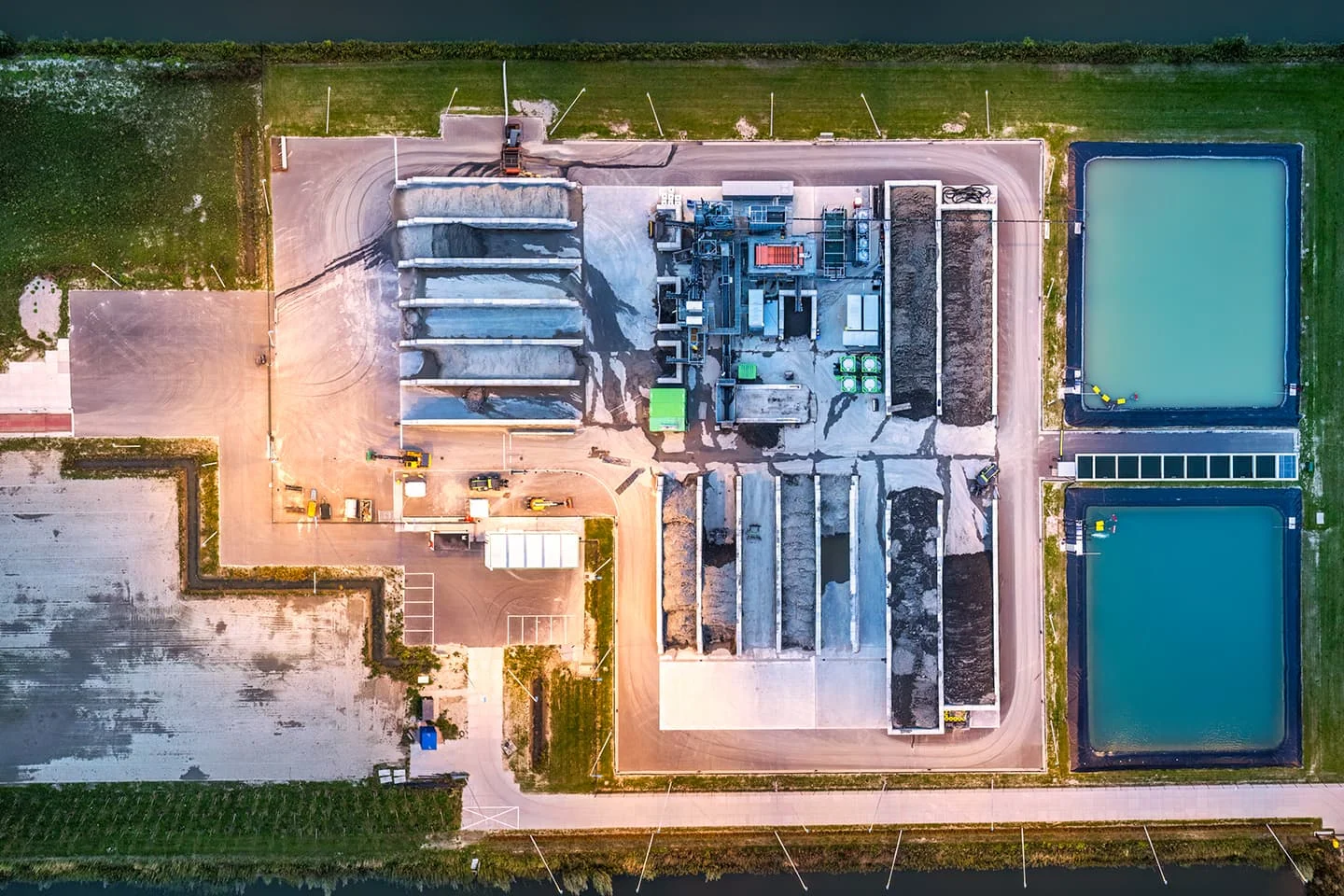
We understand that the storage and treatment of PFAS-contaminated soil raises questions and concerns among our neighbours. That is why we have implemented measures to ensure the soil is processed safely and to prevent PFAS from spreading from the facility into the surrounding environment. The Environmental Service oversees compliance with these measures.
The facility is located on an impermeable surface designed to prevent leakage. During dry and warm weather, sprinklers keep the soil in the intake and output bays moist to minimise the spread of dust. And all lorries leaving the site pass through a wheel-washing facility.
We have also agreed with local stakeholders to monitor groundwater quality twice a year and to share the results. In addition, we will continue to keep the local community informed about our activities and the outcomes of our monitoring programme.
On 12 September, we also opened the site to local residents. During this Open Day, visitors could take a close look at the installation and ask questions directly to employees from Schiphol and DEME.
During the construction of the facility, consideration was given to minimising its environmental impact. BAM used electric machinery wherever possible, as well as blocks made from surplus concrete. Among other things, this reduces emissions and noise levels during the works.
In this way, we strive not only to manage the soil we are remediating more sustainably, but also to adopt a more sustainable approach to how we build and use the facility. This is in line with our broader ambition to keep materials in the circular economy for longer and to operate in an increasingly circular way.
The soil treatment facility does not provide a solution for all PFAS contamination at Schiphol. Different locations, soil conditions and levels of contamination require different approaches. That is why we are also implementing measures elsewhere across the airport.
We have mapped PFAS contamination throughout Schiphol and assess each location to determine whether there is a risk to people, the environment or the potential spread of contamination. Where risks are identified, we investigate the most appropriate mitigation measures.
We are carrying out groundwater remediation at the S-apron, and sheet piling has been installed at a site on the south-eastern side of Schiphol to help prevent the spread of PFAS through groundwater. At the same time, we continue to monitor and evaluate new remediation techniques.
We are collaborating with the PFAS Soil Knowledge and Innovation Programme (Kennis- en Innovatieprogramma PFAS Bodem, KIP). The Ministry of Infrastructure and Water Management launched the programme this year to bring together knowledge, research and practical experience to further develop effective approaches to PFAS contamination.
PFAS contamination is a complex legacy issue that cannot be resolved quickly or easily. The PFAS soil treatment facility represents one important piece of this complex puzzle. By investing in this facility, we have also chosen a circular solution that aligns with our broader strategy of maximising the reuse of valuable resources and materials.