Schiphol’s path to sustainable heating and cooling
In November 2024, we informed you about the renewal of the collective thermal energy storage system on the Evert van de Beekstraat in Schiphol’s Business District. As a refresher: a thermal energy storage (WKO in Dutch) system is a sustainable system that stores energy in the form of heat and cold in the ground. This means much less or even no gas is needed to heat the buildings, and in summer, the buildings can be cooled with less energy. This results in a significant reduction in CO₂ emissions.
Progress
We are pleased to update you on the progress of this project. The collective thermal energy storage system, called C-WKO, now connects three prominent buildings in the Business District: The Schiphol Head Office, The Outlook, and in the future, Avioport.
The Schiphol Head Office was one of the first commercial office buildings in the Netherlands to be connected to a C-WKO; the sources have now been replaced due to reaching the end of their technical lifespan. In the past period, four sources (2 cold and 2 warm) were drilled, each 180 meters deep, and a complex underground route was constructed. This came with significant challenges, such as rerouting traffic and pedestrian and bicycle flows, careful earthmoving with attention to soil quality and existing underground infrastructure, and even research into possible explosives in the soil.
The Outlook
An important part of this project was making The Outlook building gas-free. This building houses, among others, Microsoft, Cargill, Avolta, Spaces, and Customs. Five heat pumps of 430 kW each (total 2,150 kW) now provide heating, supplemented by a booster heat pump for areas of the building that require higher temperatures. The gas boilers remain available only as backup. The building is now fully electrically climate-controlled.
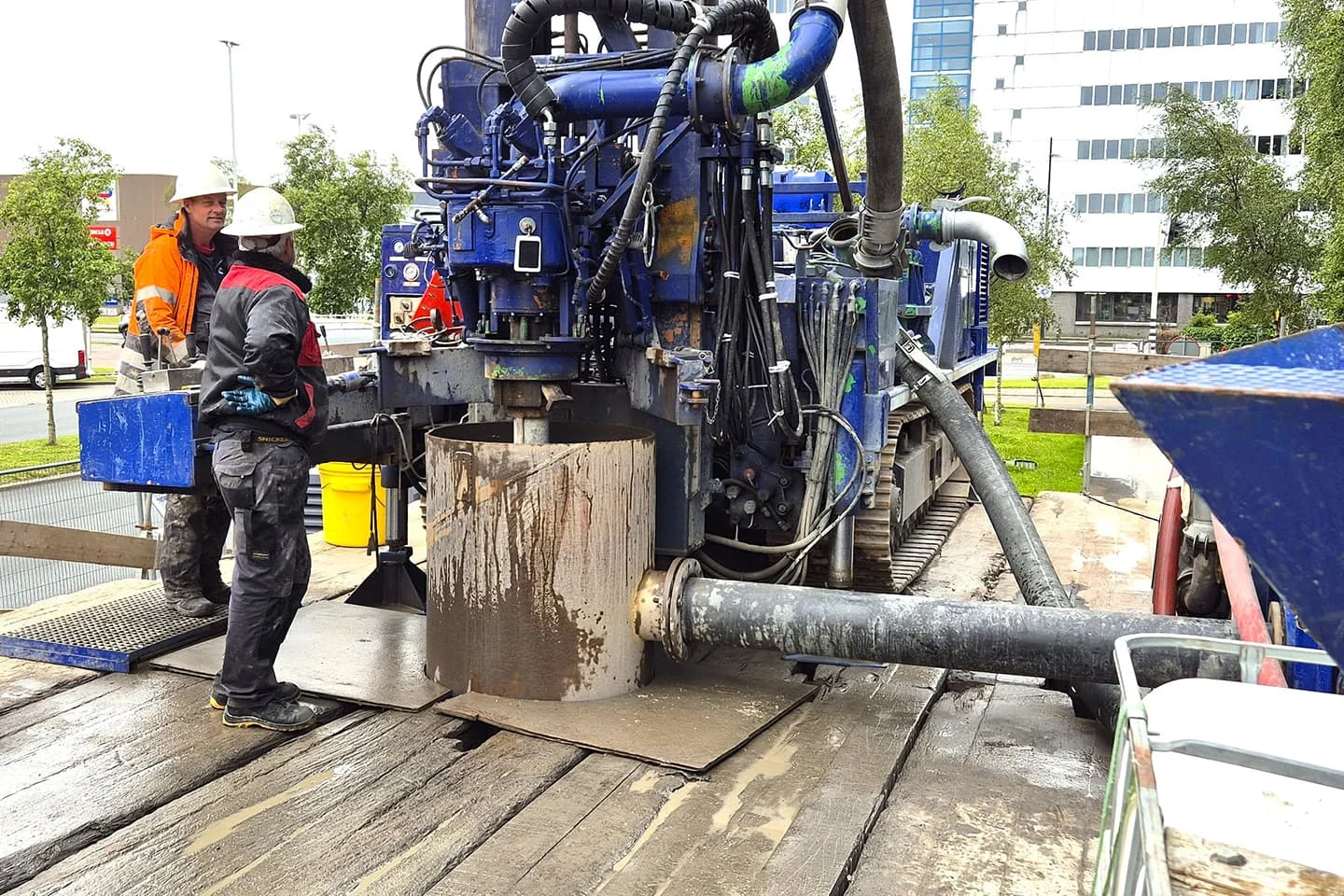
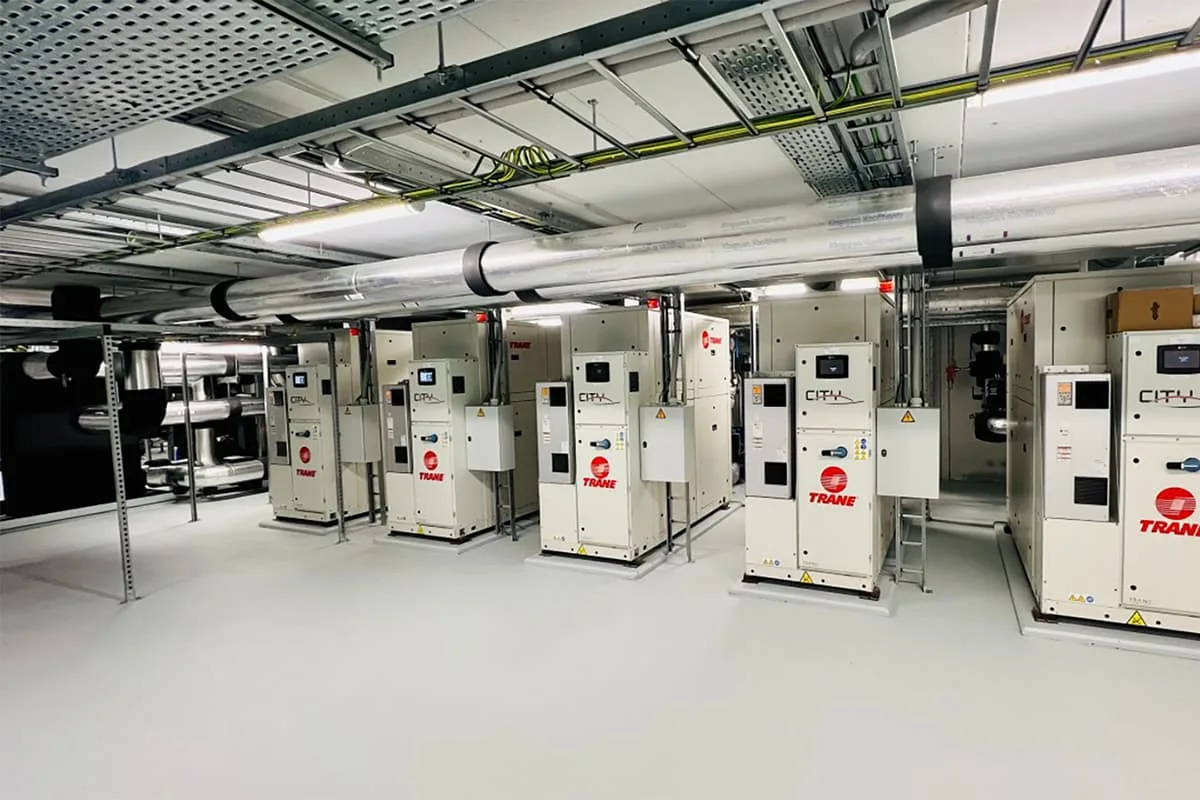
The transition to gas-free heating is complex, especially for existing buildings of this scale. But thanks to intensive collaboration with Halmos Adviseurs (technical consultancy), IF Technology (design), EQUANS (implementation), and De Ruiter Grondwatertechniek (sources and site pipelines), Schiphol Real Estate has accomplished an impressive feat of sustainable engineering.
This system is invisible to the user but has a direct impact on sustainability performance. It achieves a savings comparable to the annual energy use of 415 households.
Goal
Schiphol Real Estate’s goal remains to have all its own buildings in the Schiphol Business District off the gas grid by 2030. We are proud of the steps taken so far and look forward to further greening of the office buildings.